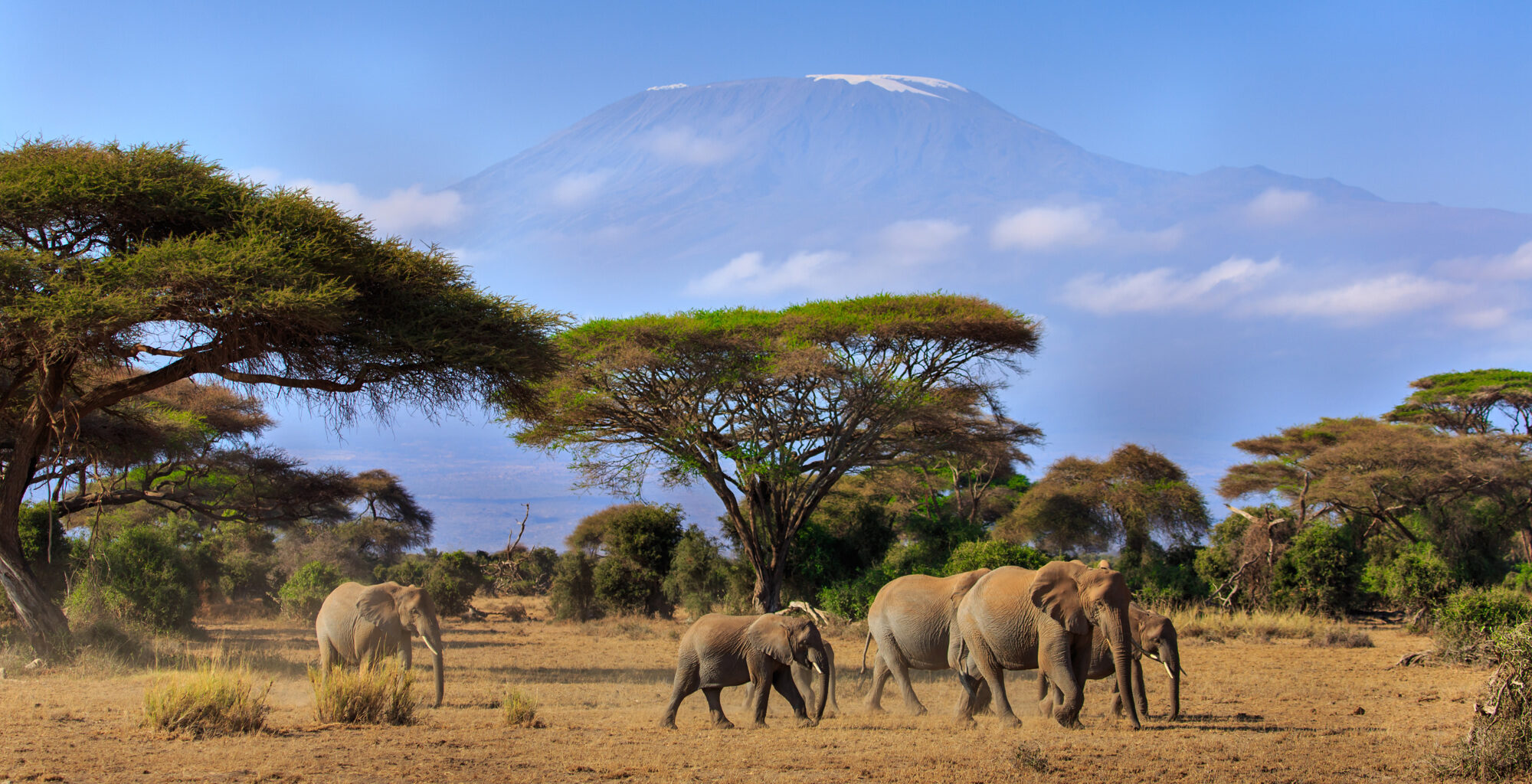
Kilimanjaro National Park.

At 5,895 meters above sea level, the roof of Africa is waiting for you.

Not metaphorically. Literally. A summit so high it holds glaciers on the equator, a peak that emerges above the clouds like something from a dream, visible from hundreds of kilometers away on a clear day, a white crown rising above the golden plains of northern Tanzania that has been stopping travelers mid-sentence since the first Europeans saw it in the 1840s and refused, initially, to believe the reports. Snow. On the equator. In Africa. Impossible.

Come and stand at the top. Then tell us what’s impossible.

Kilimanjaro National Park spans approximately 1,688 square kilometers around Africa’s highest mountain, a UNESCO World Heritage Site since 1987, and home to over 154 mammal species spread across five dramatically different ecological zones that stack one above the other like the floors of the world’s most extraordinary building. Each zone has its own climate, its own vegetation, its own wildlife, its own particular quality of light and air. To climb Kilimanjaro is not simply to climb a mountain. It is to pass through five different worlds on the way to the top.

It begins in the rainforest, lush, cool, cathedral-like, where blue monkeys move through the canopy in troops of 10 to 40 individuals and black-and-white colobus monkeys drift between branches with their flowing white mantles. Elephants move through the lower forest, their presence announced by snapped branches and the particular silence that falls when something very large is nearby. Buffalo graze the forest margins. Leopards move at night. Above the forest, the heath and moorland zone opens wide giant heathers draped in old man’s beard moss, eland grazing the high grassland, and the tree hyrax calling from the darkness with a sound so extraordinary a rising, rattling shriek that first-time campers bolt upright in their sleeping bags convinced of something terrible, before the guide explains, calmly, that it is just the hyrax saying goodnight.

Higher still, the alpine desert. Sparse, otherworldly, the air thins noticeably with every step. And then the Arctic zone glaciers, permanent snow, and the summit crater. Uhuru Peak. The highest point on the African continent. A hand-painted sign, a wooden board, and a view that stretches in every direction across a continent spread below you like a map of everything that matters.

Six established routes lead to the summit: Marangu, Machame, Lemosho, Rongai, Shira, and the Northern Circuit, each with its own character, its own scenery, its own pacing. The Rongai route, approaching from the north, offers the best wildlife encounters. The Machame and Lemosho routes are considered the most scenic. The Northern Circuit, the longest and most remote, gives the mountain its most solitary and extraordinary face.

You do not need to reach the summit to be moved by Kilimanjaro. The forest alone is worth the journey. The moorland alone rewards every step. But for those who do make it, who push through the cold and the altitude and the final pre-dawn summit push and step onto Uhuru Peak as the sun rises over Tanzania, there are no adequate words. Only the particular, permanent memory of having stood at the top of Africa, and known exactly what that felt like.
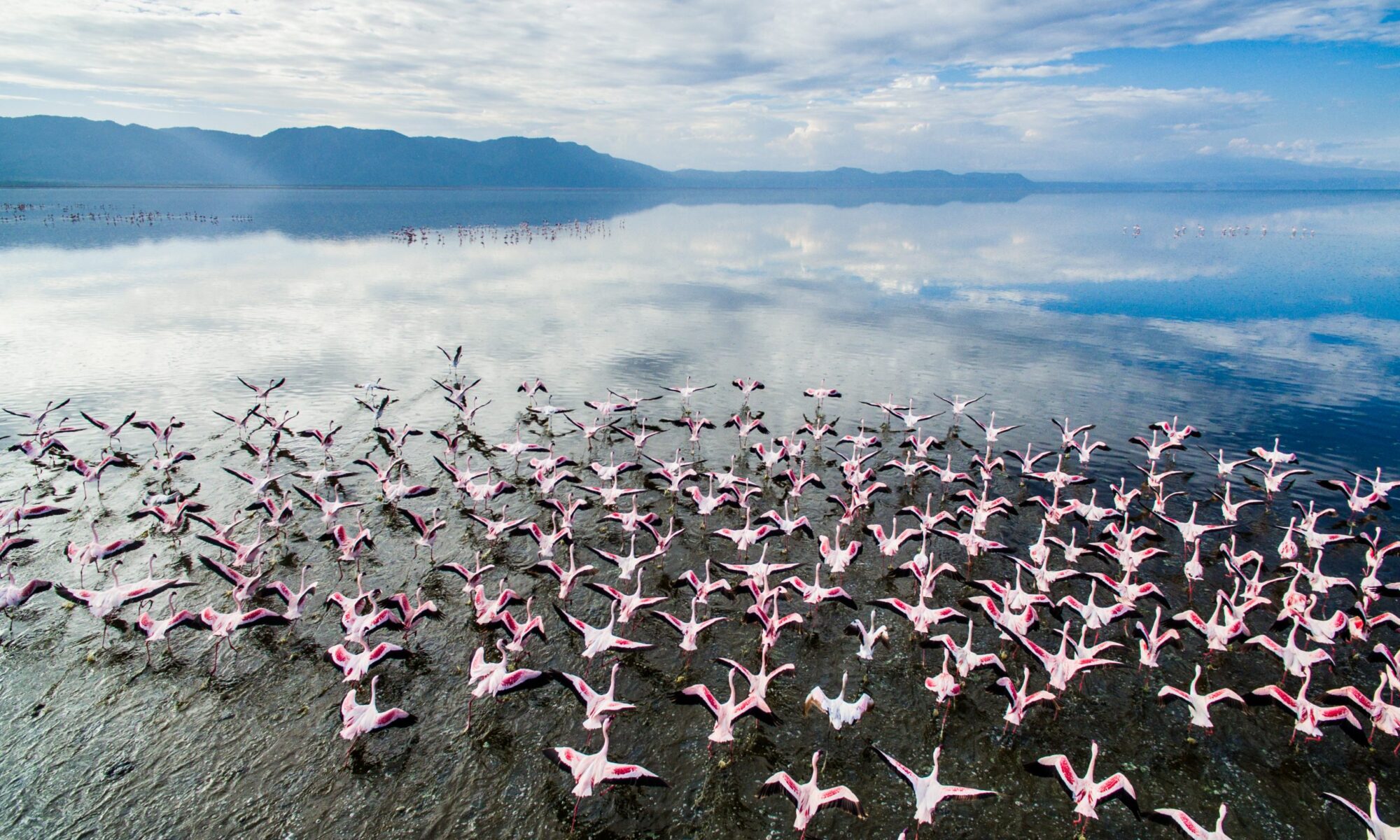
Lake Manyara National Park.

Ernest Hemingway called it the loveliest lake he had ever seen. He was not wrong, and he had seen a few.

Stretched along the floor of the Great Rift Valley in northern Tanzania, Lake Manyara sits beneath a dramatic western escarpment that rises 600 meters above it in a wall of ancient volcanic rock, the forest clinging to its face in impossible green. The lake itself, shallow, alkaline, shimmering, fills nearly two-thirds of the park’s 325 square kilometers, its surface shifting colour through the day from silver to gold to deep rose as the light changes and the flamingos move. It is one of those landscapes that photographers and painters and writers keep returning to, because it refuses to look the same twice.

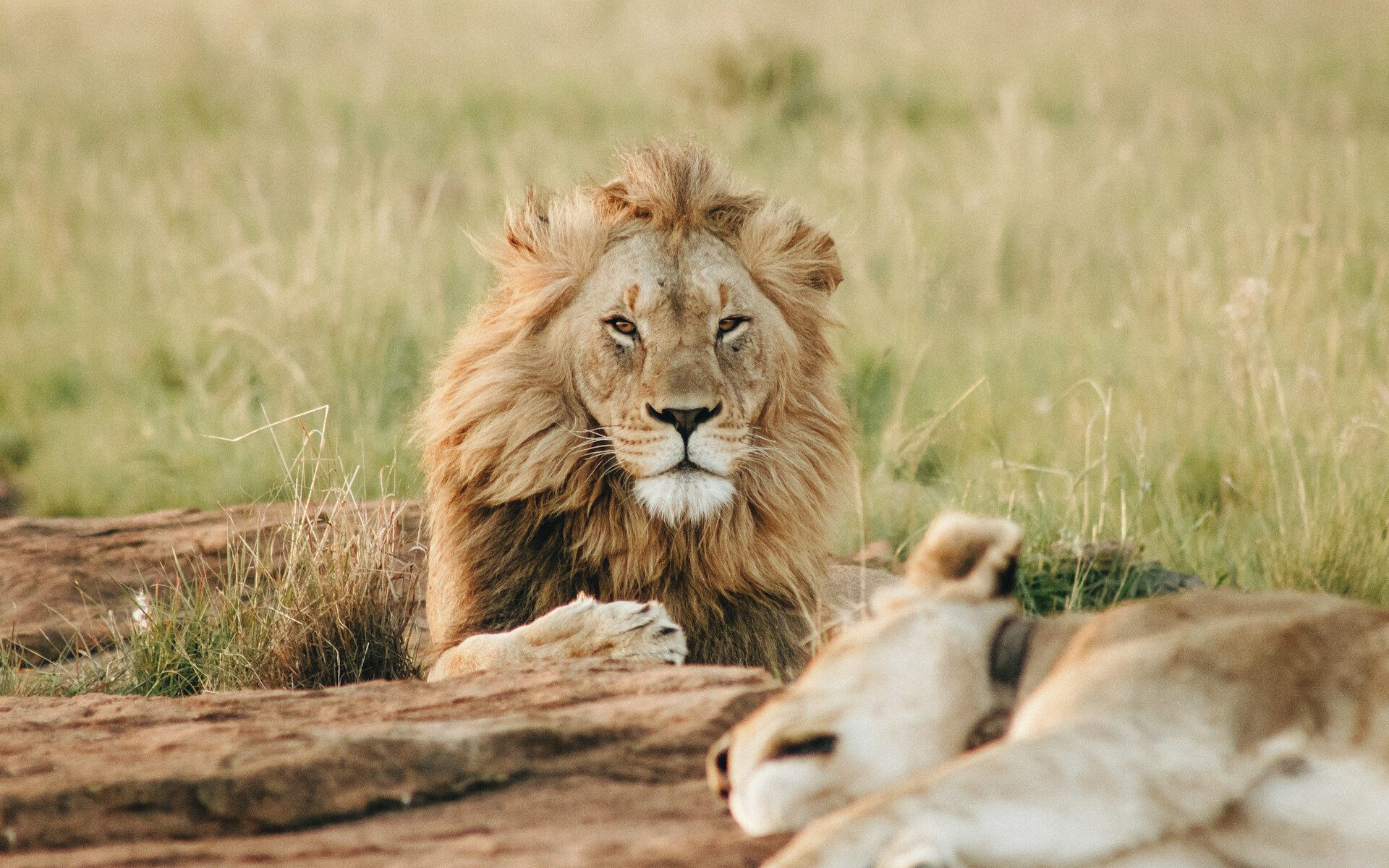
But Lake Manyara does not survive on beauty alone. It earns its place on the northern Tanzania safari circuit with something altogether more surprising, its legendary tree-climbing lions and impressively tusked elephants. The tree-climbing lions of Manyara are one of Africa’s most celebrated wildlife curiosities, big cats sprawled along branches above the forest floor, regarding the world below with magnificent indifference, in a behaviour so unusual that researchers have debated its origins for decades. Nobody has reached a definitive answer. The lions have not been asked. They simply keep climbing, and visitors keep coming to see them.

The park packs an extraordinary diversity of habitats into its compact size, groundwater forest thick with fig and mahogany at the entrance, giving way to acacia woodland, then open floodplain, then the alkaline lake shore, then papyrus swamp. Each zone holds its own cast of characters. The forest at the park entrance is home to habituated troops of olive baboons and blue monkeys so relaxed around vehicles that close encounters feel almost domestic. Elephants move between the Marang forest and the lake shore in herds whose tusks are notably large, a genetic legacy of populations that were once, in the 1960s, the highest density of elephants anywhere in Africa. Hippos wallow in the shallow lake. Buffalo herds number in the hundreds. Giraffes browse the acacia canopy against the backdrop of the escarpment in a composition so perfectly East African it looks arranged.

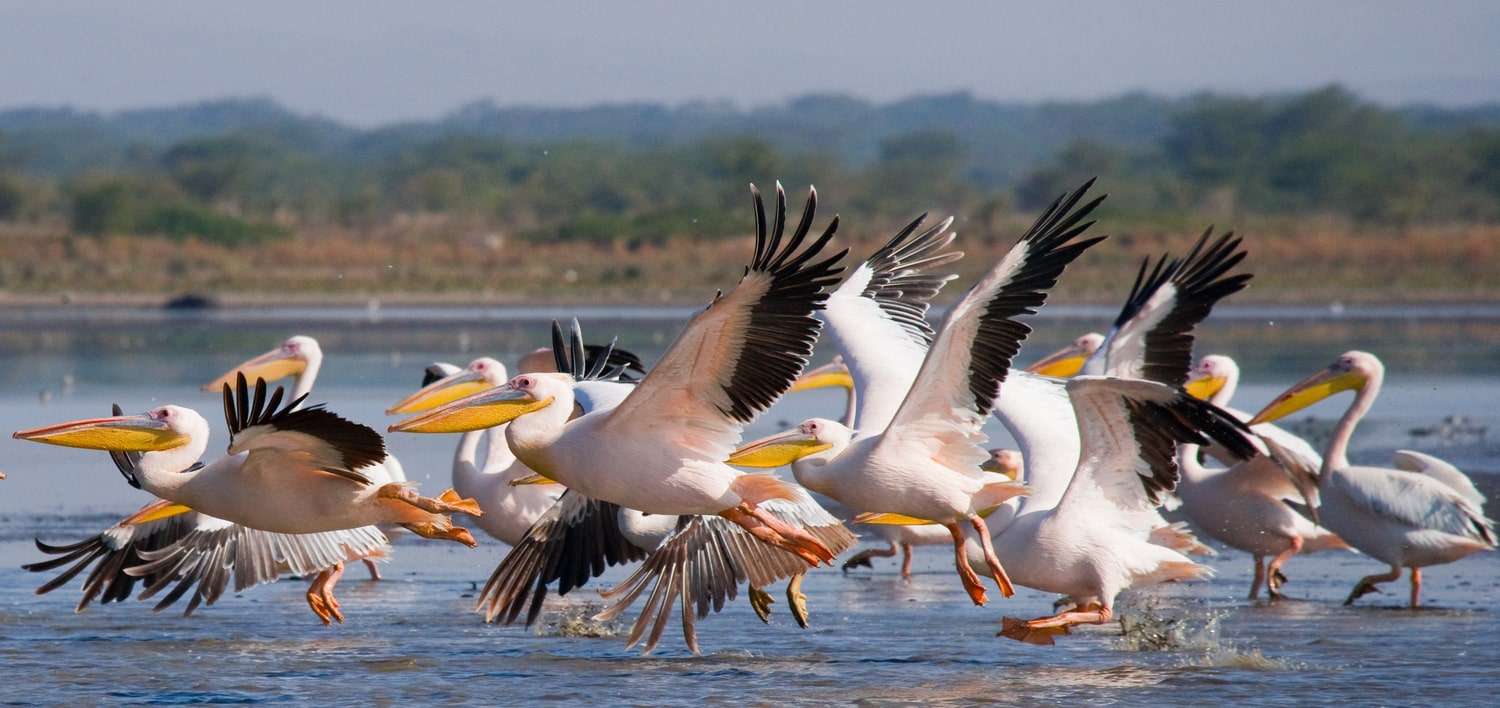
And then the birds. Over 400 bird species have been recorded in the park, with 1.9 million flamingos at peak season turning the lake’s shallows into a living, breathing, impossibly pink panorama that stretches to the horizon. Pelicans drift overhead in formation. Marabou storks patrol the shore with their undertaker’s posture. Yellow-billed storks fish the shallows. Crowned cranes step through the grassland with their golden headdresses catching the afternoon light. A serious birder could spend a week here and not exhaust the possibilities.

Lake Manyara is often the first stop on the northern Tanzania circuit, a warm-up, people call it, before the Serengeti and Ngorongoro. Those people are underestimating it. Come with open eyes, and you will leave with memories that need no comparison to anything that follows.

Tarangire National Park.

You smell them before you see them.

That warm, dusty, unmistakable scent that means elephant, and then you crest a low ridge above the Tarangire River and suddenly, spread across the valley below, there they are. Not ten. Not twenty. Hundreds. Elephant herds in Tarangire can reach over 300 individuals moving to the river in long, deliberate columns, matriarchs leading calves through the dust, the ground trembling almost imperceptibly as they approach the water’s edge. Tarangire hosts one of the largest elephant populations in East Africa, estimated at more than 3,000 individuals during the dry season. This is the Kingdom of Elephants. And nothing else you have ever seen quite prepares you for the scale of it.

Northern Tanzania’s least celebrated and most rewarding secret, Tarangire National Park, sits just 118 kilometers southwest of Arusha, close enough to reach on a morning drive, different enough from the Serengeti and Ngorongoro to feel like a completely separate world. The park has the second-highest concentration of wildlife in Tanzania after the Serengeti, a fact that most visitors discover with some surprise, having arrived expecting something smaller and quieter and finding instead an ecosystem of astonishing abundance and variety.

The Tarangire River is everything here. The single permanent water source in an otherwise parched landscape, it draws the dry season migration of the entire region’s wildebeest, zebra, buffalo, eland, hartebeest, impala, and gazelle, all converging on its banks in a concentration of life that rivals any park on the continent. And where the herds go, the predators follow. Lion prides hunt the riverine forest. Leopards drape themselves in the ancient fig trees. Cheetahs work the open southern plains. African wild dogs, rare, endangered, and utterly thrilling to encounter, have been spotted in the Silale Swamp area.

But it is the landscape itself that sets Tarangire apart from anywhere else in Tanzania. The baobab trees, ancient, enormous, impossibly shaped, some of them over 350 years old, stand across the park like sculptures made by something that was thinking on a very long timescale. At sunset, with the light going amber and a herd of elephants moving beneath them, the baobab silhouettes against an African sky produce a photograph that no filter in existence could improve. The park also holds rare dry-country species like the fringe-eared oryx and the long-necked gerenuk that impossibly elegant antelope that stands on its hind legs to browse, looking like something designed by an artist who had never quite seen a real animal.

Over 550 bird species have been recorded in Tarangire, making it one of Tanzania’s finest birding destinations, with dry-country specialists and migratory species filling the acacia and baobab woodland in extraordinary variety. Walking safaris and night game drives are permitted in the park’s northeastern sector, adding a dimension of wildlife encounter that most northern Tanzania parks cannot offer.

The Serengeti has the migration. Ngorongoro has the crater. Tarangire has the elephants, the baobabs, and a wildness that feels somehow less curated, more raw, more genuinely itself. It is the park that serious Tanzania safari travelers always mention when asked which one surprised them most.

Ngorongoro Conservation Area.

Twenty million years ago, a volcano so enormous it may have rivaled Kilimanjaro collapsed into itself. What it left behind slowly, over millennia, became one of the most extraordinary natural arenas on earth. A caldera 260 square kilometers wide, 610 meters deep, its walls rising in a dramatic ring around a world that has been largely sealed off from the outside ever since. A world within a world. An Eden with walls.

Welcome to Ngorongoro. And welcome to the most densely packed wildlife ecosystem on the planet.

Over 25,000 large mammals live permanently on the crater floor, drawn by the rich volcanic soil, the permanent water sources, and the relative shelter of the crater walls that encourage both predator and prey to stay year-round rather than follow the migrations elsewhere. What this means for the visitor is simple and extraordinary: on a single day in Ngorongoro, you have a genuine chance of seeing the Big Five all in one game drive, and it is considered one of the only places in the world where this is consistently possible. Lions on the open grassland. Elephants at the forest edge. Buffalo in vast herds. Leopards in the fever trees. And the black rhino is critically endangered, breeding in the wild, and thriving here in one of the last truly protected environments where they can do so.

The crater contains one of the world’s highest densities of lions, which thrive on the abundant prey. These are not the wandering lions of the open Serengeti; these are resident crater lions, generations of the same families hunting the same grasslands, so accustomed to safari vehicles that an approach to within meters produces nothing more than a slow blink and a return to whatever they were doing. Lake Magadi sits at the crater’s centre, its alkaline waters drawing thousands of flamingos in the wet season, turning the crater floor pink from the rim above. Hippos wallow in their shallows. Spotted hyenas prowl in clans. Cheetahs sprint across the open floor. And through it all, the Maasai, whose cattle have grazed alongside the wildlife for generations, move with their herds along the crater rim trails in a scene that has been continuous for centuries.

Beyond the crater itself, the Ngorongoro Conservation Area stretches across 8,292 square kilometers of highland plains, savanna woodlands, and forest, incorporating the Olduvai Gorge, one of the most important paleoanthropological sites on earth, where the bones of our earliest human ancestors were first discovered in the 1950s. To stand at Olduvai is to understand that the story of life in this landscape is not measured in decades or centuries but in millions of years and that everything you see moving across the crater floor today is the latest chapter in a story that began here, in this place, long before any of us had words for it.

The Ngorongoro Conservation Area spans vast expanses of highland plains, savanna, savanna woodlands, and forests, and has global importance for biodiversity conservation due to the presence of globally threatened species and the density of wildlife inhabiting the area.

The crater does not need embellishment. It does not need a superlative that has not already been applied to it. It simply needs to be experienced, descended into in the early morning mist, driven across in the golden light of a Tanzanian afternoon, and climbed out of at dusk with the particular, quiet, stunned feeling of someone who has just spent a day inside something genuinely miraculous.

Serengeti National Park.

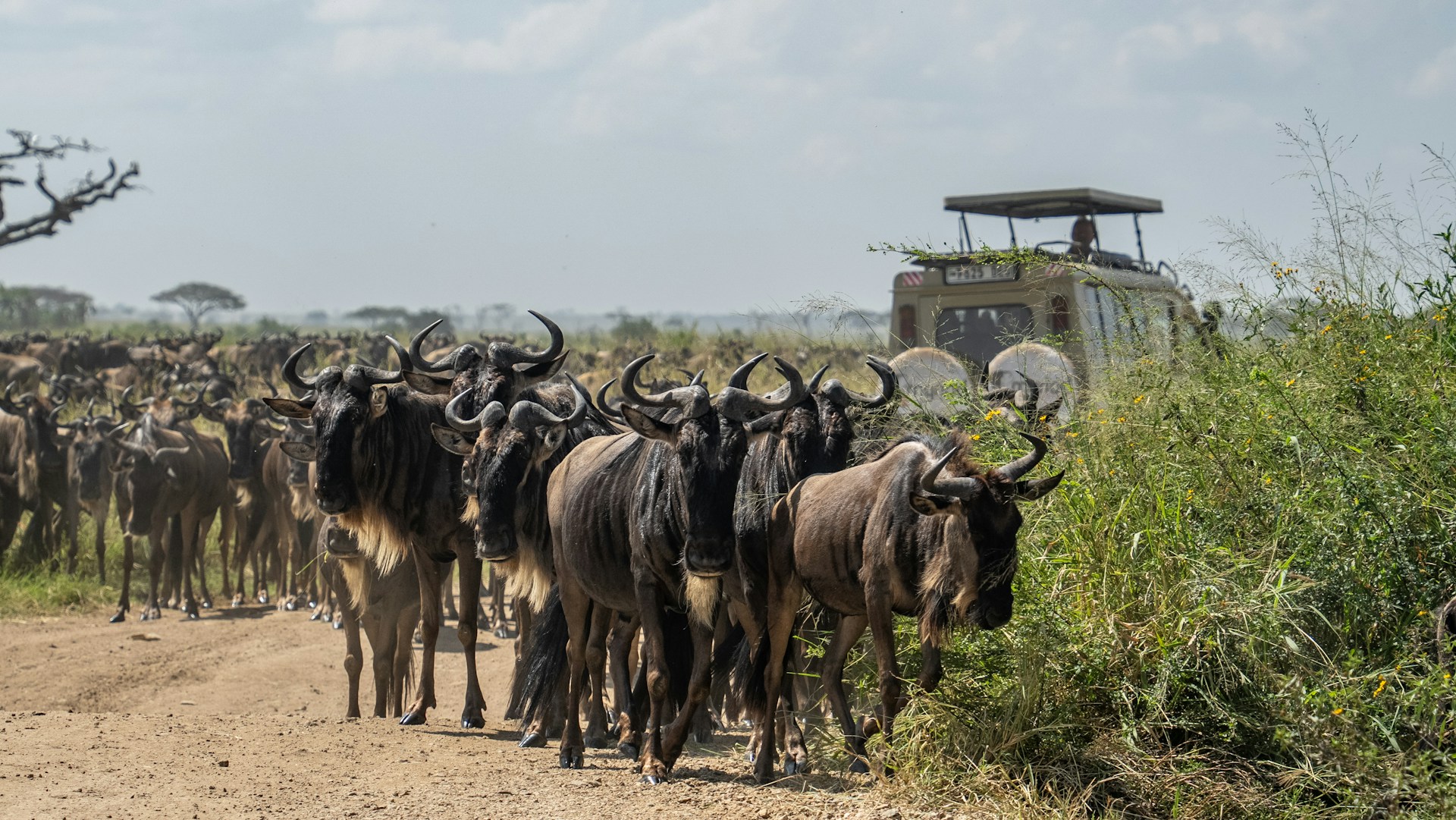
Over two million wildebeest, 300,000 zebras, 900,000 gazelles, and countless other animals complete the Great Migration every single year, a circular, seasonal journey across the Serengeti and into Kenya’s Maasai Mara driven by nothing more complicated than the search for fresh grass and water. The Tanzanian side of the ecosystem supports between 3,000 and 4,000 lions, most likely the largest lion population left in Africa. The park also counts 1,000 leopards, 550 cheetahs, and over 500 bird species among its permanent residents. These are not numbers that belong in a brochure. They belong in a place like this, that has been doing this, undisturbed, since before any of us were born.

The Serengeti covers nearly 15,000 square kilometers of savanna, woodland, kopjes, and riverine forest in northern Tanzania, a UNESCO World Heritage Site established in 1951 and unchanged in its essential wildness ever since. Every season here brings a different chapter of the migration story. January and February are the calving season on the southern plains, when 8,000 wildebeest calves are born every single day, and the predators gather in extraordinary numbers. June and July, the western corridor crossing, the Grumeti River churning with crocodiles, and the chaos of a herd deciding whether to jump. August and September are the famous Mara River crossings in the north, the moment that fills every safari photographer’s dreams and every first-time visitor’s memories for the rest of their life.

But here is what the Serengeti gives you beyond the migration, what it gives you every month of every year, regardless of season. Space. Abundance. The daily drama of predator and prey playing out on an open stage with no fence, no boundary, no script. It is not unusual to see two or three lion prides in the course of a single game drive. Cheetahs hunt the open southeastern plains in full view of every vehicle. Leopards drape themselves along the branches of fig trees above the Seronera River. Elephants move in vast herds through the western woodlands. Hippos fill every pool and river bend. And giraffes, Tanzania has one of the world’s largest giraffe populations that move across the plains with that particular slow-motion grace that never stops being extraordinary, no matter how many times you see it.

The Serengeti is not just a park. It is the standard against which every other safari destination measures itself. It is the reason the word safari exists in the way it does in the modern imagination. It is the answer to the question: what does Africa look like when it is fully, unapologetically, gloriously itself?

It looks like this. Exactly like this.

Kahuzi-Biega National Park.

Kahuzi-Biega was established in 1970 by Adrien Deschryver, a Belgian conservationist who ranks alongside Dian Fossey as one of the great protectors of the world’s endangered gorilla population. Like Fossey, Deschryver understood that the only way to save these animals was to know them, to habituate them, study them, and build a relationship between humans and gorillas that made the gorillas worth more alive than dead to every person living near this forest. That work continues today, carried by rangers and researchers in a park that faces real and ongoing conservation pressures, and that needs the presence of ethical, committed visitors to help fund its survival.

The park straddles two dramatically different worlds. The higher altitude sector, named for its two dormant volcanoes, Mount Kahuzi at 3,308 meters and Mount Biega at 2,790 meters, holds montane rainforest, bamboo, and sub-alpine heathland draped in mist and silence. The lowland sector descends into dense equatorial rainforest, swamp forest, and riverside habitat alive with primates and birds, and the quiet, persistent energy of a forest ecosystem operating at full, unhurried capacity. To move between the two zones is to feel the park’s extraordinary ecological range: two landscapes, two sets of wildlife, one boundary.

Kahuzi-Biega is one of the remarkable parks in the DRC where silverback gorillas and golden monkeys coexist with the silver and the gold of the forest, sharing the same mountain slopes in one of nature’s more poetic arrangements. Chimpanzees move through the canopy. Forest elephants push silently through the undergrowth. Leopards and golden cats hunt in the darkness. Over 342 bird species fill the trees, including the Congo peafowl and the African green broadbill, a rare species that makes serious birders travel extraordinary distances for a single sighting.

With over 136 mammal species, 342 bird species, 69 reptiles, and 44 amphibians, Kahuzi-Biega is a biodiversity hotspot of global significance, a UNESCO World Heritage Site protecting wildlife found nowhere else on earth, in a forest that deserves far more of the world’s attention than it currently receives.

Come for the eastern lowland gorilla. Leave understanding why this forest, and everything in it, must be protected at all costs.

Virunga National Park.

Established in 1925 to protect the mountain gorillas of the Virunga volcanoes, Virunga National Park has spent the century since quietly accumulating superlatives. With a bird checklist of 706 different species, more birds than in the entire United States of America, it is the most biodiverse protected area on the African continent. It contains the largest concentration of hippopotamuses in Africa, 20,000 individuals living on the banks of Lake Edward and along the great rivers of eastern Congo. Both savanna elephants and forest elephants reside here, one of the few places in the world where both species coexist. And it does all of this against a backdrop of active volcanoes, Rwenzori peaks, and a landscape so varied it encompasses equatorial forest, high alpine moorland, savanna grassland, and volcanic lava fields within a single park boundary.

At its heart, as it has always been, are the gorillas. Mountain gorillas in the volcanic south. Eastern lowland gorillas in the lowland forest. Twenty-two primate species in total, three of them critically endangered mountain gorillas, eastern lowland gorillas, and chimpanzees, all sharing a park that has fought, sometimes at terrible human cost, to keep them alive. Over 800 rangers protect Virunga around the clock, in a region that has known armed conflict for decades. They do it because they understand that what lives inside these borders cannot be replaced. Not anywhere. Not ever.

Mount Nyiragongo, one of the world’s most active volcanoes, rises within the park’s southern sector, its summit crater holding a permanent lava lake that glows orange against the night sky in one of the most dramatic natural spectacles on earth. To hike to its rim at dusk and watch the lava churn in the darkness below is to feel the planet’s raw, volcanic energy in a way that no words adequately describe.

The okapi, endemic to the tropical forests of the DRC, once thought locally extinct, has rebounded in the park since its rediscovery in 2006. This extraordinary animal, striped like a zebra, bodied like a horse, related to the giraffe, moves through the northern forest as it has for millennia, shy and solitary and magnificent.

Virunga is not an easy park to visit. Its security situation is complex and requires careful planning with trusted operators. But for those who come for the gorillas, the volcano, the hippos on Lake Edward, the 706 species of birds, the okapi in the northern forest, it is not simply a safari. It is a confrontation with what is most ancient and most precious about the natural world.

Salonga National Park.

The largest block of intact lowland tropical rainforest in the Congo Basin and accessible only by water or air, Salonga National Park stretches across 36,000 square kilometers in the heart of the Democratic Republic of Congo, making it the largest tropical rainforest reserve in all of Africa, and one of the most important ecosystems on earth. A UNESCO World Heritage Site. A carbon sink of global significance. A place so vast and so intact that it remains, in large parts, scientifically unexplored.

What lives here exists on a different register from almost anywhere else in Africa. Salonga protects approximately 15,000 bonobos, possibly 40% of the entire world population, making it the largest expanse of legally protected bonobo habitat on earth. The bonobo — our closest great ape relative alongside the chimpanzee, matriarchal, peaceful, and found only in the Congo Basin moves through these forests in ways science is still working to fully understand. To encounter one in Salonga is not just a wildlife sighting. It is a meeting with something irreplaceable.

The Congo peafowl, a bird so rare it remained undiscovered by science until the 20th century, lives here. Forest elephants move through the undergrowth. Golden cats hunt the shadows. Sitatunga antelopes wade through the swamp forest. Pangolins, ancient and armored, forage through the leaf litter of a forest that has never been logged, never been farmed, never been anything other than exactly what it is.

Salonga does not offer itself easily. It rewards the committed traveler who understands that the most extraordinary places on earth are not always the most comfortable to reach, and that the reward for getting here is something that cannot be found anywhere else on the planet.

Lake Nakuru National Park.

Tucked into the floor of the Great Rift Valley in central Kenya, Lake Nakuru National Park is a UNESCO World Heritage Site compact, fenced, and extraordinarily productive for wildlife. At just 188 square kilometers, it is one of Kenya’s smallest parks, but it offers one of the highest wildlife returns per day in the entire country. Everything here is concentrated, accessible, and reliably present, which means game drives in Nakuru deliver encounter after encounter with a consistency that larger, more dispersed parks cannot always match.

The rhinos are the park’s conservation crown jewel. Kenya’s first rhino sanctuary, Lake Nakuru, supports one of the country’s largest populations of both black and white rhinos, a protected breeding ground that has supplied rhinos to other parks across Kenya through translocation programs. White rhinos are particularly easy to see, encountered in different groups throughout the day, especially around the causeway at the western end of the lake. To watch a white rhino grazing calmly in the morning light, the lake glittering pink behind it, is one of those quietly perfect safari moments that stays with you long after the drive is over.

The Rothschild’s giraffe, one of the rarest giraffe subspecies in the world, was introduced to the park in the 1970s and has thrived, with over 80 individuals recorded today. Distinguished by their unmarked white lower legs, they move through the acacia and euphorbia forest with the regal unhurry of an endangered species that has found its footing. The park has become a core breeding and translocation site, sending Rothschild’s giraffes to other protected areas across Kenya, a quiet, ongoing conservation success story unfolding in the tree line every day.

Leopards have been unusually visible here in recent years. Nakuru has attracted fame for its high number of leopard sightings, the acacia forest providing perfect cover and equally perfect vantage points for the cats to watch the lake and its surrounding grasslands. Lions hunt the open flood plains. Tree-climbing lions have been documented here, making Lake Nakuru one of the best places in Kenya to see this rare behaviour, shared with only Uganda’s Ishasha plains and a handful of other locations in the world. Buffalo, waterbuck, zebra, impala, and warthog fill the grasslands. Hippos wallow at the lake’s edge. Pythons move through the reeds.

And through it all above it, around it, reflected in it, over 450 bird species fill the park’s sky, making Lake Nakuru one of East Africa’s most rewarding birding destinations in a country already full of extraordinary birding destinations.

Small park. Enormous experience. Come for the flamingos. Stay for everything else.

Aberdare National Park.

Aberdare National Park is Kenya’s well-kept highland secret, a place that does not play by the rules of the typical East African safari. There is no open savanna here. No flat horizon. No golden grass catching the afternoon light. Instead altitude. Mist. Dense montane rainforest rising to nearly 4,000 meters above sea level, bamboo thickets so tall they form their own dark world, and open moorlands swept by highland winds where the sky feels enormous and close at the same time. This UNESCO-recognized park forms part of Kenya’s Central Highlands Forest Complex, one of Kenya’s five key water towers, feeding the Tana, Athi, and Ewaso Nyiro rivers, supplying water and hydroelectric power to millions of people downstream, including Nairobi. To protect Aberdare is not just to protect wildlife. It is to protect the water supply of an entire nation.

But the wildlife needs no justification beyond itself. Aberdare holds the second largest population of black rhinos in Kenya, a conservation achievement of enormous significance in a continent where rhino numbers have been devastated by poaching. Elephants move through the forest in quiet, deliberate herds. Leopards, both spotted and the legendary black morph, haunt the riverine forest. Lions make occasional appearances from the moorland. Buffalo graze the highland glades. All five of the Big Five are present in a setting utterly unlike anywhere else in Kenya.

And then there is the bongo. Kenya’s rarest antelope, chestnut-coated with white stripes, moving ghost-like through dense forest undergrowth, finds its last natural stronghold here in the Aberdares. To see one in the wild is a sighting that veteran safari guides speak of in hushed, reverent tones. The bongo does not perform. It does not present itself conveniently on an open plain. It reveals itself briefly, quietly, and entirely on its own terms to those patient enough to wait for it.

Aberdare is also where Kenya invented the concept of the tree hotel and where those hotels still deliver their original promise with undiminished magic. At Treetops and The Ark, guests gather at floodlit waterholes after dark to watch elephants, rhinos, buffalo, and forest hog emerge from the trees one by one, drinking and grazing in the quiet of the highland night. It was at Treetops in 1952 that Princess Elizabeth went to bed as a princess and woke as Queen of England, a detail that the lodge mentions with the casual pride of somewhere that knows its own history.

Over 290 bird species fill the park’s altitude zones, including the Aberdare cisticola, found only here, and the crowned eagle, a forest predator powerful enough to take small primates from the canopy. Hartlaub’s turaco, the bar-tailed trogon, and Jackson’s francolin. The birding here is highland, specialized, and extraordinary in its own quiet way.

Aberdare does not shout. It whispers. And those who lean in to listen find a Kenya that the open-plains safari crowd almost entirely misses: ancient, layered, and full of rare and beautiful things moving through the mist.