Lake Mburo National Park

Tucked into the rolling hills of southwestern Uganda, Lake Mburo National Park is the smallest savanna park in the country, just 260 square kilometers of acacia woodland, open grassland, rocky ridges, and glittering lakes. It does not have the dramatic scale of Murchison or the lion-and-elephant thunder of Queen Elizabeth. What it has is something different an intimacy. A closeness to the wildlife that makes every game drive, every walk, every boat cruise feel personal in a way that larger parks rarely manage.

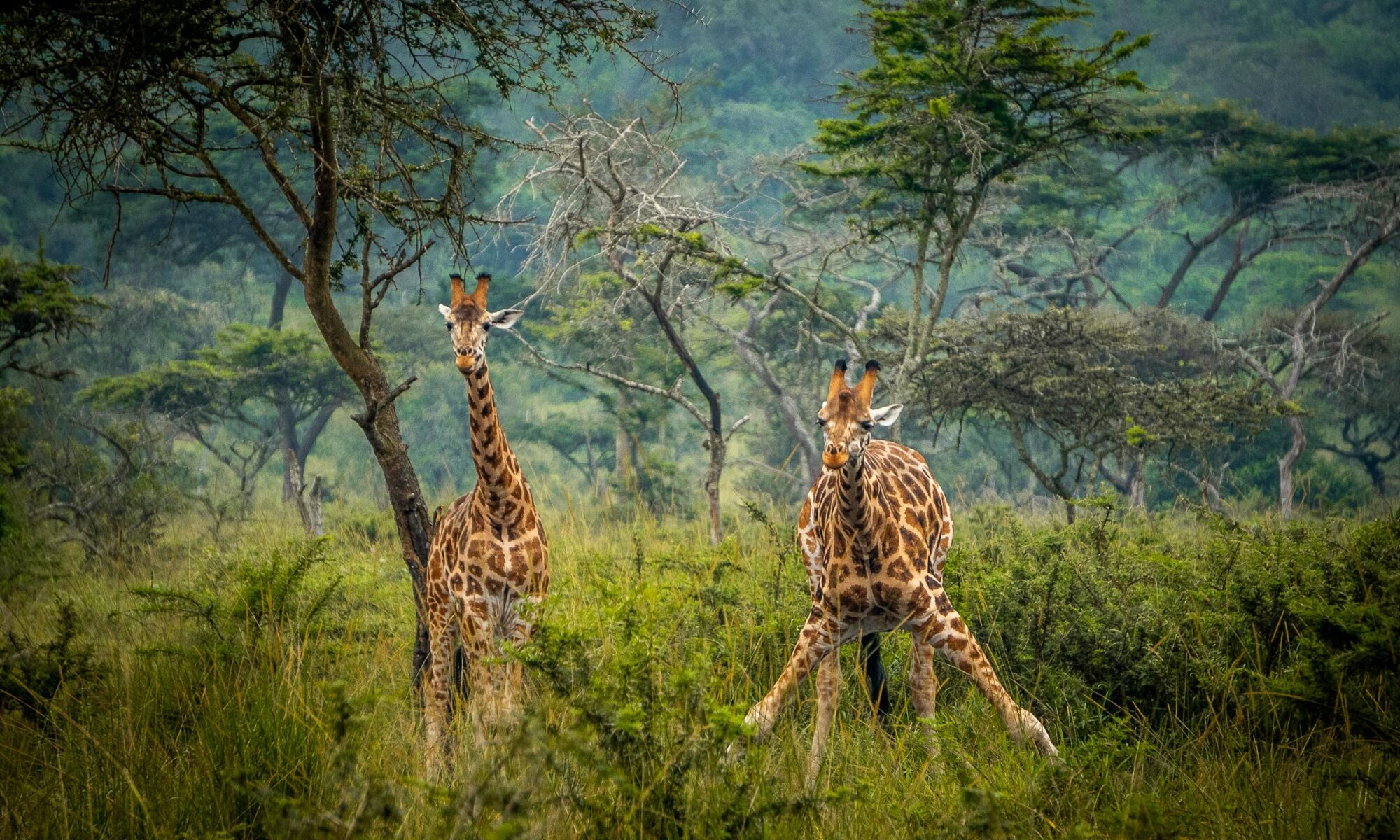
And it holds things that no other park in Uganda can offer. The impala that most elegant of antelopes, rust-coated and quick-eyed is found naturally in Uganda only here. The eland, Africa’s largest antelope, moves quietly through the northern granite plateaus. The klipspringer, sure-footed and compact, picks its way across rocky outcrops. Over 5,000 Burchell’s zebra roam the grasslands the largest zebra population in Uganda their stripes catching the afternoon light in a way that never gets ordinary. Rothschild’s giraffes, reintroduced in 2015, now browse the acacia stands with the unhurried grace of animals slowly reclaiming a landscape that always belonged to them.

Lake Mburo is also, quietly, Uganda’s best park for leopards. Camera trap studies have confirmed a concentration of leopards here that rivals anywhere in the country, and a night drive through the woodland spotlight sweeping the darkness, guide leaning forward, everyone holding their breath is one of the most thrilling ways to spend an evening in East Africa. They are here. You just have to be patient and lucky in roughly equal measure.

Five lakes lie within the park’s borders, connected by a fifty-kilometer wetland system fed by the River Rwizi. A boat cruise on Lake Mburo at sunset is among Uganda’s most serene and rewarding wildlife experiences hippos surfacing ten meters from the bow, Nile crocodiles watching from the banks, a shoebill standing impossibly still in the shallows, and the sky turning colours that no photograph ever quite captures. Over 350 bird species have been recorded here, including rare gems like the African finfoot and papyrus yellow warbler, making it a genuinely excellent birding destination that many people discover almost by accident.

And that is perhaps Lake Mburo’s greatest gift. People pass through it on their way to Bwindi or Queen Elizabeth, intending to spend a night and find themselves staying longer than planned. Waking up to birdsong, going out on a walking safari before breakfast, watching zebra graze from the lodge veranda with a coffee going cold in their hands. It does that to people. It slows them down in the best possible way.
Pian Upe Game Reserve

Uganda’s largest savanna reserve doesn’t announce itself loudly. It draws you in slowly through wide open plains that stretch toward the Kadam and Napak mountains, through the rustle of dry grass in a warm northeastern wind, through the quiet thrill of spotting a topi on a ridge at golden hour with no one else around for miles.

Covering over 2,000 square kilometers in the Karamoja sub-region, Pian Upe is Uganda’s best kept wild secret. Where other destinations offer the familiar, Pian Upe offers the rare roan antelope, eland, ostrich, Jackson’s hartebeest, Bright’s gazelle, and one of the country’s most significant topi populations, all moving freely across a landscape that feels genuinely untouched. Over 200 bird species inhabit the reserve, making it a quiet paradise for those who know where to look and how to listen.

This is not a place that performs for you. It is a place that simply is ancient, unhurried, and breathtakingly alive. The Pokot and Karamojong people have called this land home for generations, and their deep relationship with the territory adds a human warmth to the wilderness experience that you will not find anywhere else.

Come with curiosity. Leave with something harder to name a stillness, a sense of perspective, a memory of a sky so wide and so honest it recalibrates something inside you.

Kidepo Valley National Park

There are places in Africa that stop you mid-sentence. Places where the landscape is so vast, so unhurried, so unapologetically wild that whatever you were about to say simply dissolves into the air. Kidepo Valley National Park is one of those places.

Tucked into the far northeastern corner of Uganda, East Africa where the land presses quietly against the borders of South Sudan and Kenya Kidepo exists at the edge of the familiar world. It is more than 700 kilometers from Kampala by road, and every kilometer of that distance feels intentional. As if the journey itself is part of the preparation. As if Kidepo needs you to have left everything behind before you arrive.

Covering 1,442 square kilometers of rugged, semi-arid savanna, Kidepo is a landscape of dramatic contrasts. Ancient mountains rise at its edges Mount Morungole standing sentinel to the east, its ridgeline cutting a jagged silhouette against skies that seem wider here than anywhere else on earth. Below, two great valleys the Kidepo and the Narus cradle rivers that pulse with life during the rains and draw every living thing to their banks when the dry season settles in. It is in these valleys, particularly the Narus, where the magic concentrates. Where herds of buffalo numbering in the thousands raise clouds of dust across the golden plains. Where lions rest on rocky outcrops in the afternoon heat. Where elephants move with the slow, certain grace of creatures that have never been hurried.

Kidepo is home to over 86 mammal species 28 of which cannot be found in any other national park in Uganda. This is where you find the cheetah, the caracal, the greater and lesser kudu, the bat-eared fox, and the aardwolf. Predators and prey sharing a landscape so open and so honest that there is nowhere to hide and no reason to. Over 475 bird species have been recorded here, making Kidepo the second most important birding destination in Uganda, with species so rare and so particular to this corner of East Africa that seasoned birders travel from across the world for a single sighting.

And yet, for all its biological richness, what stays with people longest about Kidepo is not any single animal or any single moment. It is the feeling of the place. The sense that you are standing somewhere genuinely untouched. The Ik and Karamojong peoples have called this landscape home for centuries, their lives woven into the same rhythms that govern the wildlife — the rains, the rivers, the movement of herds. Their presence gives Kidepo a human depth that enriches every experience, reminding you that wilderness is never truly empty. It is always, quietly, inhabited.

Kidepo does not offer the polished, predictable safari. It offers something rarer the real thing. The unscripted encounter. The unhurried afternoon. The night sky so dense with stars it feels like the universe leaned in close just for you.

This is Uganda at its most ancient and its most alive.

Rwenzori Mountains National Park

Imagine standing on the equator and looking up at snow.

That is Rwenzori. That is the moment that makes every traveler who has ever stood at the base of these mountains stop talking, stop photographing, and simply stare. Because nothing quite prepares you for a mountain range that rises out of tropical Uganda into glaciers, snowfields, and peaks that scrape the sky at over 5,000 meters. This is not what people expect when they book a trip to Africa. And that is exactly what makes it unforgettable.

Welcome to Rwenzori Mountains National Park southwestern Uganda, East Africa home to Margherita Peak, Africa’s third highest summit, and one of the most astonishing trekking experiences on the entire continent. The ancient Greeks heard stories of a mysterious mountain range feeding Africa’s great rivers and named it the Mountains of the Moon. Stand here today and you will completely understand why.

Your journey through the park is a journey through worlds. Start in lush tropical rainforest where chimpanzees call overhead and leopards move silently through the undergrowth. Climb higher into cool bamboo forest, then into magical heathland draped in moss where giant heathers tower above you like something from a fairy tale. Higher still, the moorland opens up — wide, wild, and scattered with giant lobelias and groundsels that grow nowhere else on earth. And at the top? Snow. Ice. A glacier shimmering above the equator. A view that will take your breath away though at that altitude, the thin air may have already done that.

This is a UNESCO World Heritage Site for good reason. The Rwenzori range is home to over 70 mammal species, 217 bird species 19 found nowhere else on the planet and plant life so extraordinary that botanists travel from across the world just to see it. Your Bakonzo guide, whose ancestors have called these slopes home for centuries, will walk beside you not just as a guide but as a storyteller, unlocking a landscape that rewards curiosity at every turn.

You do not have to summit to fall in love with Rwenzori. Day hikes, forest walks, birdwatching at altitude there is a version of this experience for every kind of traveler. But for those who do make it to the top, to Margherita Peak at 5,109 meters, standing above the clouds with all of Africa below that is a story you will be telling for the rest of your life.

Queen Elizabeth National Park

Somewhere in Uganda, a lion is sitting in a tree.

Not pacing. Not hunting. Just sitting sprawled across a thick fig branch in the Ishasha Plains, tail dangling, watching the world below with the bored magnificence of a creature that has figured something out that no other lion population on earth has bothered to. Tree-climbing lions. It sounds like something someone made up. It is absolutely real. And it is just one of the reasons Queen Elizabeth National Park refuses to be ordinary.

This is Uganda’s most visited national park and it earns that title every single day. A park of dramatic contrasts where open savanna rolls into tropical forest, volcanic crater lakes drop into ancient calderas, and wetlands give way to grasslands where herds of Uganda kob move like a golden tide across the plains. There is always something happening here. Always something moving, calling, hunting, grazing. Queen Elizabeth is never still.

The Kazinga Channel is the park’s beating heart a 40-kilometer natural waterway connecting Lake George to Lake Edward, and one of the finest boat cruise experiences in all of Africa. Drift along its banks and you will encounter hippos by the hundreds, Nile crocodiles sunning on the shores, elephants wading in at dusk, and a dazzling parade of waterbirds that makes even non-birders reach for their binoculars. Over 600 bird species have been recorded here 600 making it one of the most important birding destinations on the entire continent. The shoebill alone, that prehistoric-looking giant lurking in the papyrus swamps, is worth the entire journey.

Deep in Kyambura Gorge, a lush forest canyon carved dramatically into the surrounding savanna, habituated chimpanzees swing and call through the treetops. Tracking them on foot hearing them before you see them, watching them regard you with the unsettling intelligence of a close relative is an experience that will stay with you long after you have left. Nearby, Maramagambo Forest hides leopards, colobus monkeys, forest elephants, and a cave full of bats so vast the pythons that live at its entrance never go hungry.

With over 95 mammal species and a landscape that shifts from savanna to forest to wetland within a single afternoon, Queen Elizabeth does not ask you to choose your kind of safari. It offers all of them simultaneously, generously, and without apology.

Named in 1954 to commemorate a royal visit, Queen Elizabeth National Park has long held court as Uganda’s most celebrated wild space. Come and see why the crown still fits.

Mgahinga Gorilla National Park

Eight permits. One gorilla family. Every single day just eight people get to go in.

That number tells you everything you need to know about what kind of experience Mgahinga Gorilla National Park offers. Not a spectacle. Not a crowd. An encounter quiet, intimate, and so close to something genuinely wild that your hands will shake a little and you won’t be embarrassed about it at all.

Uganda’s smallest national park punches so far above its weight it almost defies logic. Just 33.7 square kilometers you could drive around the boundary in under an hour. But size here is completely irrelevant, because what lives inside these borders is among the rarest and most extraordinary wildlife on earth. The Nyakagezi gorilla family, eleven strong and including two silverbacks, roams the misty volcanic forest of the Virunga Mountains a transboundary wilderness shared between Uganda, Rwanda, and the Democratic Republic of Congo. To track them on foot through bamboo forest and dense undergrowth, to push through the last wall of vegetation and find yourself standing ten meters from a silverback who looks up briefly, decides you are not interesting enough, and goes back to eating that moment will rearrange something inside you permanently.

Three ancient volcanoes define the skyline here Mount Muhavura, Mount Gahinga, and Mount Sabinyo, their perfect conical peaks rising from 3,474 to 4,127 meters above sea level, wreathed in cloud and draped in forest. They are not just beautiful. They are the reason everything else exists here. The volcanic slopes create a layered world of ecosystems montane forest giving way to bamboo, bamboo giving way to open alpine moorland each zone with its own cast of creatures and its own particular kind of magic.

And then there is the golden monkey. Flame-faced, acrobatic, and found in only two places on the planet the Virunga volcanoes and one small forest in Rwanda this is one of Africa’s most beautiful and least seen primates. Tracking them through the bamboo is a joy that birders and wildlife lovers alike describe as completely unexpected. You came for gorillas. The golden monkey surprises you into loving it just as fiercely.

The Batwa people, Uganda’s oldest indigenous forest community, were the original guardians of this forest. Long before it had a name on any map, they lived within it hunting, healing, singing, surviving. Their knowledge of the forest is encoded in generations of memory, and a walk with a Batwa guide through Mgahinga is not a cultural add-on. It is a profound reminder that the wilderness you are visiting has always been someone’s home.

Kibale Forest National Park

You hear them before you see them.

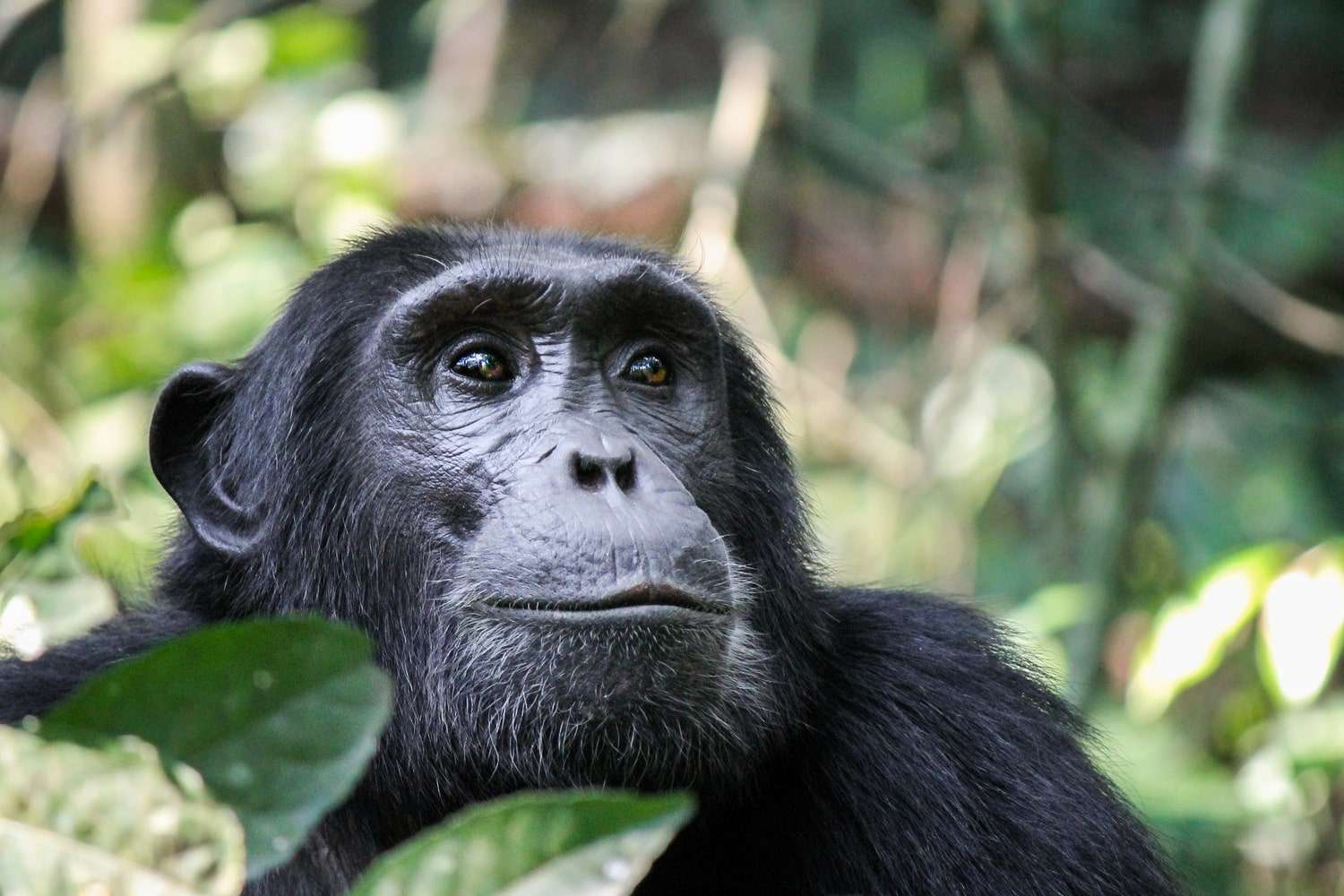
A distant hoot. Then another. Then the forest erupts a full chimpanzee chorus rising through the canopy of western Uganda, wild and electric and completely impossible to prepare for. You stand still, heart hammering, as your guide reads the sound and moves forward. And then, through a gap in the trees, there they are. A family of chimpanzees going about their morning feeding, grooming, playing, arguing with the casual confidence of creatures who have never doubted for a moment that this forest belongs to them.

Welcome to Kibale National Park. The Primate Capital of Africa. And it has earned that title honestly.

Spread across 795 square kilometers of evergreen tropical rainforest in western Uganda, Kibale is home to 13 primate species and over 1,500 chimpanzees the highest concentration of primates on the entire African continent. This is the single best place on earth to track wild chimpanzees. Not one of the best. The best. The habituated Kanyanchu community has been studied and monitored since 1993, which means your encounter with them is not a lucky sighting it is a guarantee. An hour in their company, watching them swing, call, feed, and occasionally glance at you with an unsettling flash of recognition, is the kind of experience that reframes the way you think about what it means to be human.

But Kibale is far more than chimpanzees. Red colobus monkeys endangered and found here in the world’s largest population move in noisy troops through the upper canopy. The rare Uganda mangabey, found nowhere else on the planet, forages quietly below. L’Hoest’s monkeys, red-tailed monkeys, blue monkeys, black-and-white colobus, olive baboons at any given moment, the forest around you is alive with primate life in a way that simply does not exist anywhere else. Forest elephants move silently through the undergrowth. Leopards are present, elusive, and all the more thrilling for it. Over 375 bird species fill the trees, including 23 Albertine Rift endemics that send serious birders into quiet raptures.

And just outside the park boundary, the community-run Bigodi Wetland Sanctuary offers one of Uganda’s most rewarding and unexpected walks a raised boardwalk through papyrus swamp and gallery forest, rich with birds, sitatunga antelope, otters, and yet more primates spilling over from the park. Every shilling spent there goes directly back into the local community. It is the kind of tourism that feels genuinely good.

The forest here is ancient and layered and alive in a way that is difficult to put into words. It asks nothing of you except attention. Give it that, and it will give you back something you were not expecting a deep, quiet understanding of just how extraordinary the natural world really is.

Murchison Falls National Park

The Nile doesn’t ask permission.

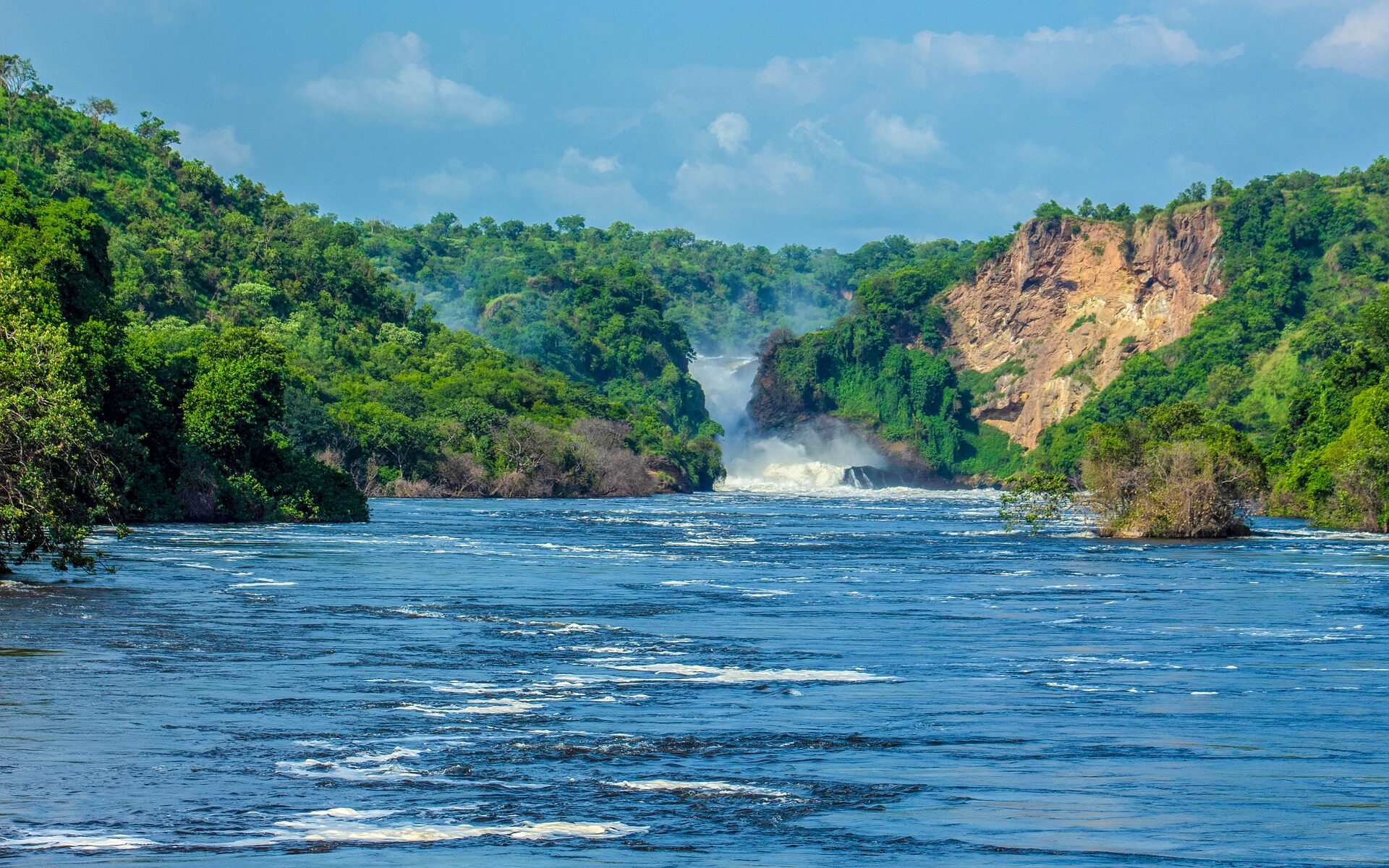
For millions of years, the world’s longest river has carved its way northward through the heart of Africa unhurried, unstoppable, ancient beyond comprehension. And then, in the northwest of Uganda, it does something extraordinary. The entire force of the Victoria Nile squeezes through a rocky gorge just seven meters wide and explodes out the other side in a thundering white curtain of water that shakes the ground beneath your feet and fills the air with mist and sound and a kind of primal energy that you feel in your chest long before you see it with your eyes.

That is Murchison Falls. And that is just the beginning.

Uganda’s largest and oldest national park stretches across 3,840 square kilometers of open savanna, riverine forest, and woodland in northwestern Uganda a landscape so vast and so varied that it has been drawing wildlife and wonder-seekers for nearly a century. Gazatted as a wildlife reserve in 1926, Murchison is the grand old institution of Ugandan conservation, the park that started it all, and it shows in the sheer abundance of life that moves across its plains and along its river banks every single day.

The game drives here are extraordinary. Rothschild’s giraffes one of the most endangered giraffe subspecies on earth have long called the northern plains home, their long necks swaying above the Borassus palms in a sight that never loses its magic no matter how many times you see it. Elephant herds roam freely, their numbers steadily growing a conservation success story playing out in real time. Lions hunt the open savanna where over 35,000 Uganda kob graze in golden-coated abundance. Leopards move quietly through the riverine forest. Buffalo herds, numbering in the thousands, raise dust on the horizon at dusk.

And then there is the river. A boat cruise up the Victoria Nile toward the base of the falls is one of the great wildlife experiences in all of East Africa. The banks are thick with hippos hundreds of them, grunting and jostling and regarding your boat with enormous, sleepy indifference. Nile crocodiles, the largest population in Uganda, lie motionless on the sand like ancient stones. Elephants wade in at the water’s edge. Over 556 bird species line the banks — the shoebill standing magnificent and prehistoric in the shallows, the African fish eagle calling across the water, the goliath heron patient and tall against the reeds.

And if the savanna and the river are not enough, the Budongo Forest one of East Africa’s finest mahogany forests lies to the south, harboring over 600 chimpanzees available for trekking, along with red-tailed monkeys, blue monkeys, and black-and-white colobus swinging through the canopy overhead.

Murchison Falls does not do anything quietly. It is big, bold, and completely overwhelming in the best possible way a park that reminds you, emphatically and repeatedly, that Uganda’s wildlife story is one of the greatest on earth.

Bwindi Impenetrable Forest National Park

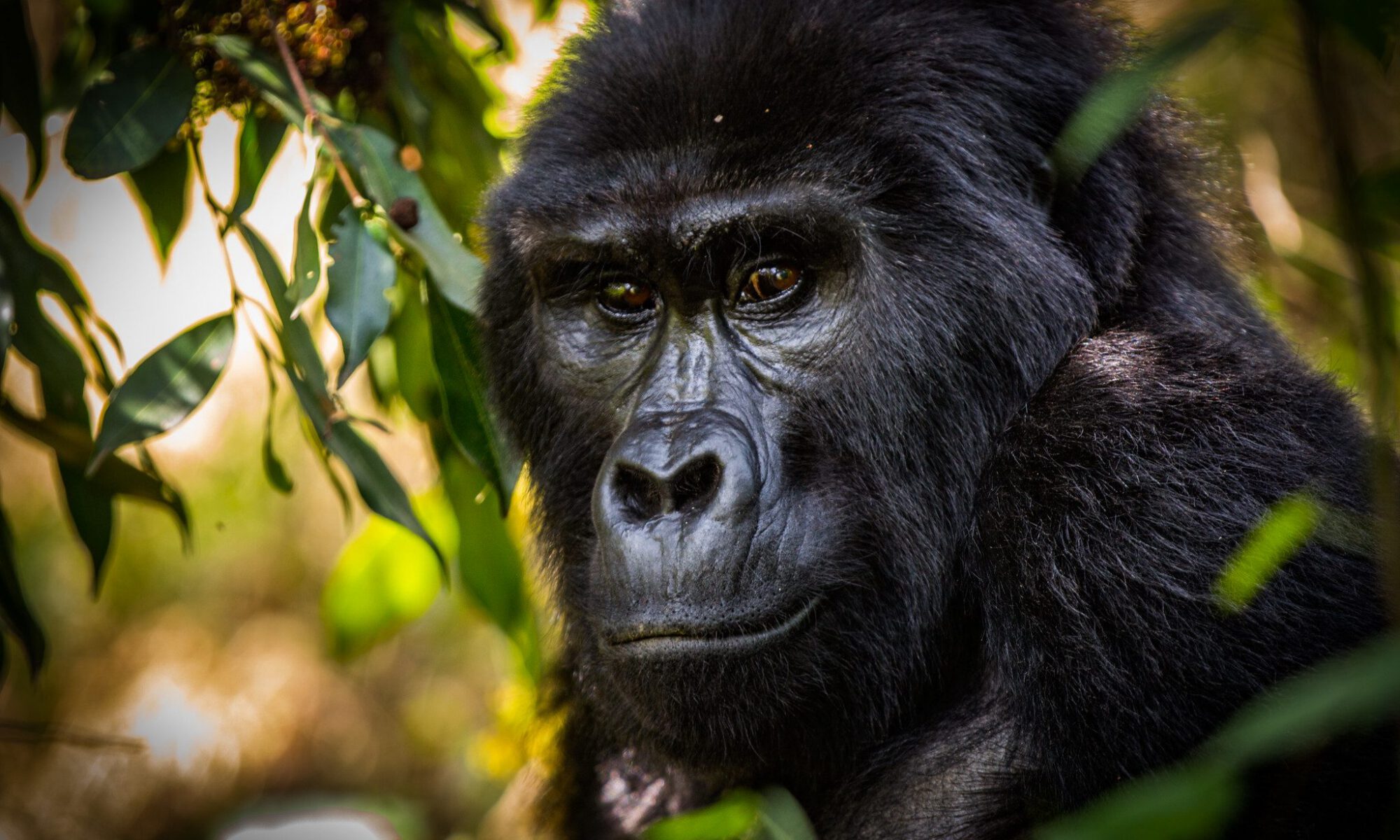
Of all the mountain gorillas left on this earth every single one of them nearly half live in this forest. Not in a zoo. Not in a sanctuary. In the wild, ancient, mist-covered hills of southwestern Uganda, moving through vegetation so dense the locals have always called it impenetrable. A forest so thick that sunlight struggles to reach the floor. A forest that has stood, largely unchanged, for 25,000 years.

Bwindi Impenetrable Forest National Park is one of the most extraordinary places on the African continent a UNESCO World Heritage Site covering 321 square kilometers of steep, forested mountain terrain along the edge of the Albertine Rift. It is not an easy place to move through. The trails climb and drop without apology. The vegetation grabs at your clothes. The mud is real. Your guide moves ahead with the calm certainty of someone who has done this a thousand times, reading the forest the way other people read a book a bent branch here, a knuckle print there, a smell that means something important. And then he stops. Raises his hand. Points.

A family of mountain gorillas, going about their morning as if you were not there a silverback resting against a tree trunk with the unshakeable authority of a patriarch, young ones tumbling over each other in the undergrowth, a mother nursing her infant with a tenderness so recognizable it catches you off guard. You have one hour with them. Sixty minutes that will rearrange something fundamental in the way you see the world and your place in it. Every single visitor who has ever stood in that moment describes it the same way — quietly, haltingly, with the slightly stunned expression of someone who has just been changed.

There are 14 habituated gorilla families across Bwindi’s four trekking sectors Buhoma, Ruhija, Rushaga, and Nkuringo each offering a different terrain, a different atmosphere, a different version of the same irreplaceable encounter. The mountain gorilla population has grown from under 300 individuals in the 1980s to over 1,000 today one of conservation’s greatest success stories, funded in no small part by the permits in the hands of visitors just like you.

But Bwindi is not only gorillas. It never was. This forest holds 120 mammal species, 350 bird species 23 of them endemic to the Albertine Rift 310 butterfly species, and over 1,000 flowering plant species. Chimpanzees move through the lower forest. Colobus monkeys leap between ancient trees. The African green broadbill, one of Africa’s most sought-after birds, lives here and almost nowhere else. The Batwa the forest’s original indigenous inhabitants offer cultural experiences that open a window into a way of life as old as the trees themselves.

The Bakiga and Bafumbira communities surrounding the park have become its most important guardians, their livelihoods intertwined with conservation in a model that the rest of Africa looks to for inspiration. When you buy a gorilla permit, you are not just buying an experience. You are funding rangers, protecting habitat, and sustaining communities. Every shilling counts. Every visit matters.

Come prepared to be humbled. Come prepared to be moved. Come prepared to stand in the rain in a forest older than memory and look into the eyes of a mountain gorilla and understand, with absolute clarity, why places like this must be protected at all costs.