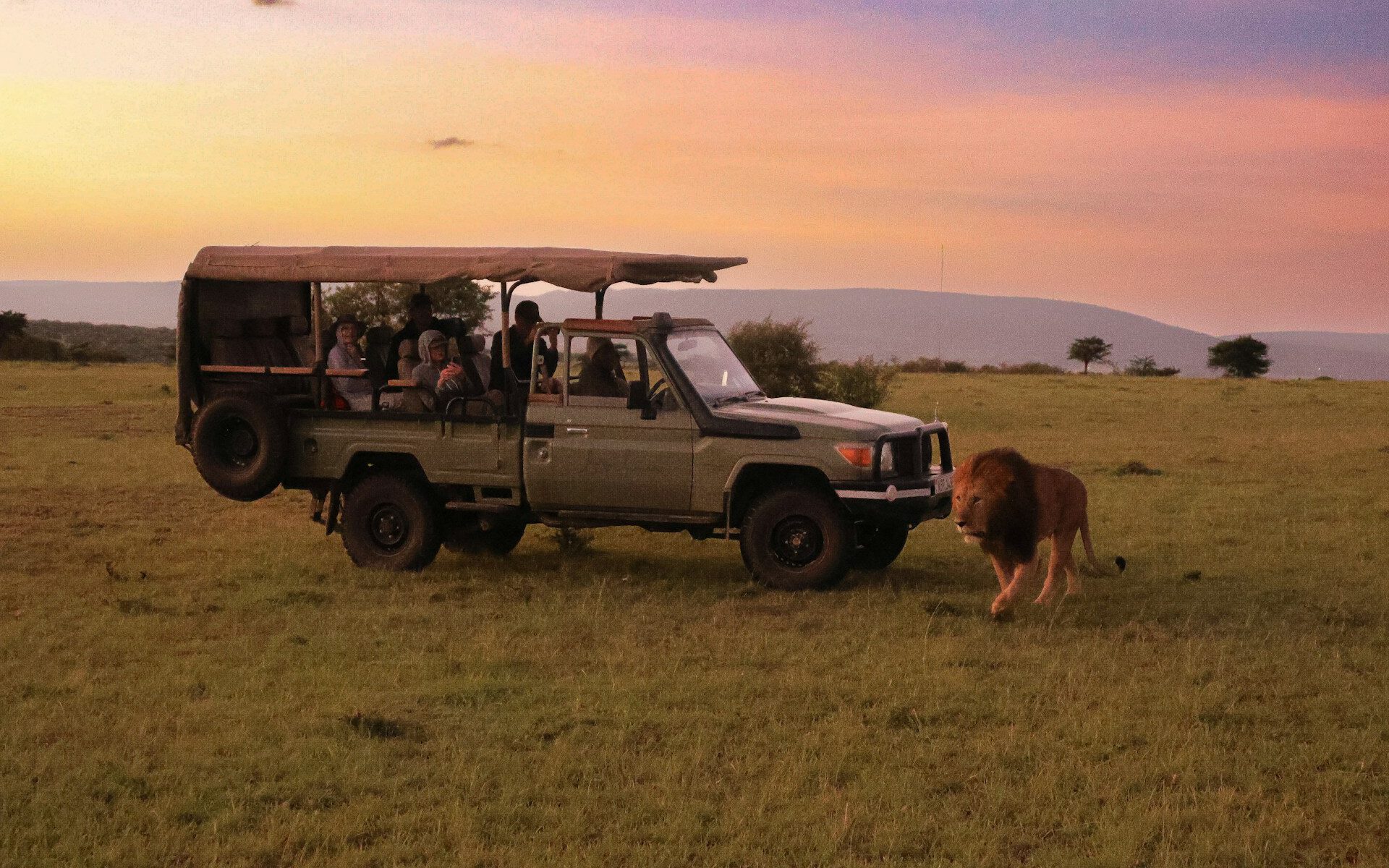
Samburu National Reserve.

Samburu National Reserve sits 320 kilometers north of Nairobi in a landscape that feels like it belongs to a different continent entirely. Rugged, sun-scorched, ancient, a semi-arid wilderness of red dust, acacia scrub, rocky hills, and endless sky where the heat shimmers on the horizon and the Ewaso Ng’iro River cuts through the dryness like a lifeline, drawing every living thing to its banks. This is not the lush, green safari of the postcards. This is something rawer, stranger, and in its own way far more compelling.

It was here that George and Joy Adamson released the famous lioness Elsa, inspiring the beloved book and film Born Free. The legacy of that story of coexistence, of wildness respected and returned, lives on in every lion that prowls these riverbanks today. Samburu has always been a place where the relationship between humans and wildlife is taken seriously. Save the Elephants, founded by Dr. Iain Douglas-Hamilton, is headquartered inside Samburu, one of the world’s most important elephant research organizations, tracking and protecting one of northern Kenya’s most significant elephant populations from right here, in this reserve, in real time.

But what makes Samburu truly extraordinary, what sends wildlife lovers into a quiet, private rapture, is the Samburu Special Five. These are five dry-country species found almost nowhere else in Kenya, animals so perfectly adapted to this harsh northern landscape that they exist here and practically nowhere south of the equator. The reticulated giraffe has the most striking coat pattern of any giraffe species. The Grevy’s zebra is larger, with narrower stripes and enormous, rounded ears, and is one of the most endangered zebra species on earth. The Beisa oryx is long-horned and dignified. The gerenuk, standing on its hind legs to reach sparse leaves with a balletic improbability that stops every first-time visitor cold. And the Somali ostrich, its blue neck flushing vivid during breeding season. Five animals. One reserve. Found almost nowhere else in Kenya.

The Ewaso Ng’iro River is the reserve’s beating heart, a wide, sandy-banked waterway lined with doum palms, fig trees, and the kind of riverine forest that shelters leopards with an ease that makes Samburu one of the best places in all of Kenya for leopard sightings. Lions hunt the open plains. Cheetahs move through the scrub. Elephants cross the river in the late afternoon, their reflections rippling in the current. Nile crocodiles wait on the sandbars with a patience that is prehistoric and absolute. Some fortunate visitors witness lions and Nile crocodiles fight over prey on the banks of the Ewaso Ng’iro, one of the most dramatic and unpredictable wildlife encounters in Africa.

Over 450 bird species fill the reserve’s varied habitats, including dry-country specialists shared with Ethiopia and Somalia that cannot be found in any other Kenyan park. The vulturine guineafowl, iridescent and improbable. The golden-breasted starling is burning like a jewel in the acacia. The Somali bee-eater. Samburu is a birder’s secret, and those who discover it rarely stop talking about it.

The Samburu people, warriors and pastoralists in vivid red shukas, close relatives of the Maasai, have lived alongside this wildlife for centuries. Their presence gives Samburu a cultural richness and an authenticity that deepens every safari experience. This is their land. The wildlife is their neighbour. And walking into that relationship as a visitor, with curiosity and respect, is one of the finest things Kenya has to offer.
Tsavo National Park.

Together, Tsavo East and Tsavo West form the largest national park in Kenya and one of the largest wildlife conservation areas on the entire African continent, over 22,000 square kilometers of ancient, untamed wilderness stretching from the Kenyan highlands down toward the coast. A landscape so vast that it swallows you completely, so wild that the animals here feel genuinely unaware that anywhere else exists. This is not a park you pass through. It is a park you disappear into.

And Tsavo has a legend. In 1898, during the construction of the Uganda Railway, two maneless male lions began stalking and killing the railway workers camped near the Tsavo River. Over nine months, they terrorized hundreds of workers, dragging men from their tents at night, vanishing into the darkness before morning. The story gripped the world. The lions were eventually shot, and their taxidermied bodies today sit in the Field Museum in Chicago. But the legacy lives on. Tsavo’s lions are still known for their maneless, sand-coloured appearance. Still known for hunting in the dark. Still known for an intelligence and boldness that even veteran guides speak of with a particular kind of respect.

Tsavo East is home to over 12,000 elephants, the largest population of African bush elephants in Kenya. But these are not ordinary elephants. The iron-rich volcanic soil of Tsavo turns them into extraordinary dust-bathing in the red earth until their grey hides flush a deep terracotta, and they move across the rust-coloured plains like creatures from another world entirely. The famous red elephants of Tsavo are one of Africa’s most iconic and instantly recognisable wildlife sights, and seeing a herd of them streaming toward the Galana River in the evening light, red against red, enormous and deliberate, is a moment that belongs on no one’s mood board. It belongs in person, in real time, in the actual heat of a Tsavo afternoon.

Tsavo East sprawls across open savanna and dry bush, its flat, wide landscape ideal for game drives where the horizon itself becomes part of the experience. Tsavo West is altogether different, dramatic, and volcanic, its terrain rising and falling through rocky outcrops, lava fields, and the crystal-clear Mzima Springs, where hippos float in waters so transparent they look like they are suspended in glass, and enormous Nile crocodiles move silently beneath the surface. An underwater viewing chamber at Mzima lets you watch hippos walk the riverbed from below, one of the most surreal wildlife experiences in East Africa.

The Big Five roam both parks. Tsavo East is one of the few places in Kenya to see the fringe-eared oryx, a striking, long-horned antelope that adds a rare prize to any wildlife checklist. Gerenuk — the long-necked antelope that stands on its hind legs to browse picks its way through the thornbush with a balletic improbability that delights everyone who sees it for the first time. Over 500 bird species have been recorded across both parks, making Tsavo one of Kenya’s finest and most underrated birding destinations.

What Tsavo offers above all else is space. The sense of a wilderness that has not been managed into tidiness, that operates on its own ancient logic, that rewards those willing to drive deeper and sit longer and wait with the particular kind of patience that wild Africa asks of you. The Mara is famous. Amboseli is iconic. But Tsavo is where Kenya goes feral, raw, red, and magnificently itself.

Amboseli National Park.

Tucked into southern Kenya along the Tanzanian border, Amboseli National Park sits in the shadow of Kilimanjaro, and what a shadow it is. At 5,895 meters, Africa’s highest peak dominates the southern horizon with the kind of commanding, cloud-wrapped presence that makes every game drive feel cinematic. The mountain disappears into cloud for most of the day, which only makes the moments it reveals itself at dawn, at dusk, in the clear golden minutes between feel like a gift. A reward for patience. A reminder that the best things in nature cannot be scheduled.

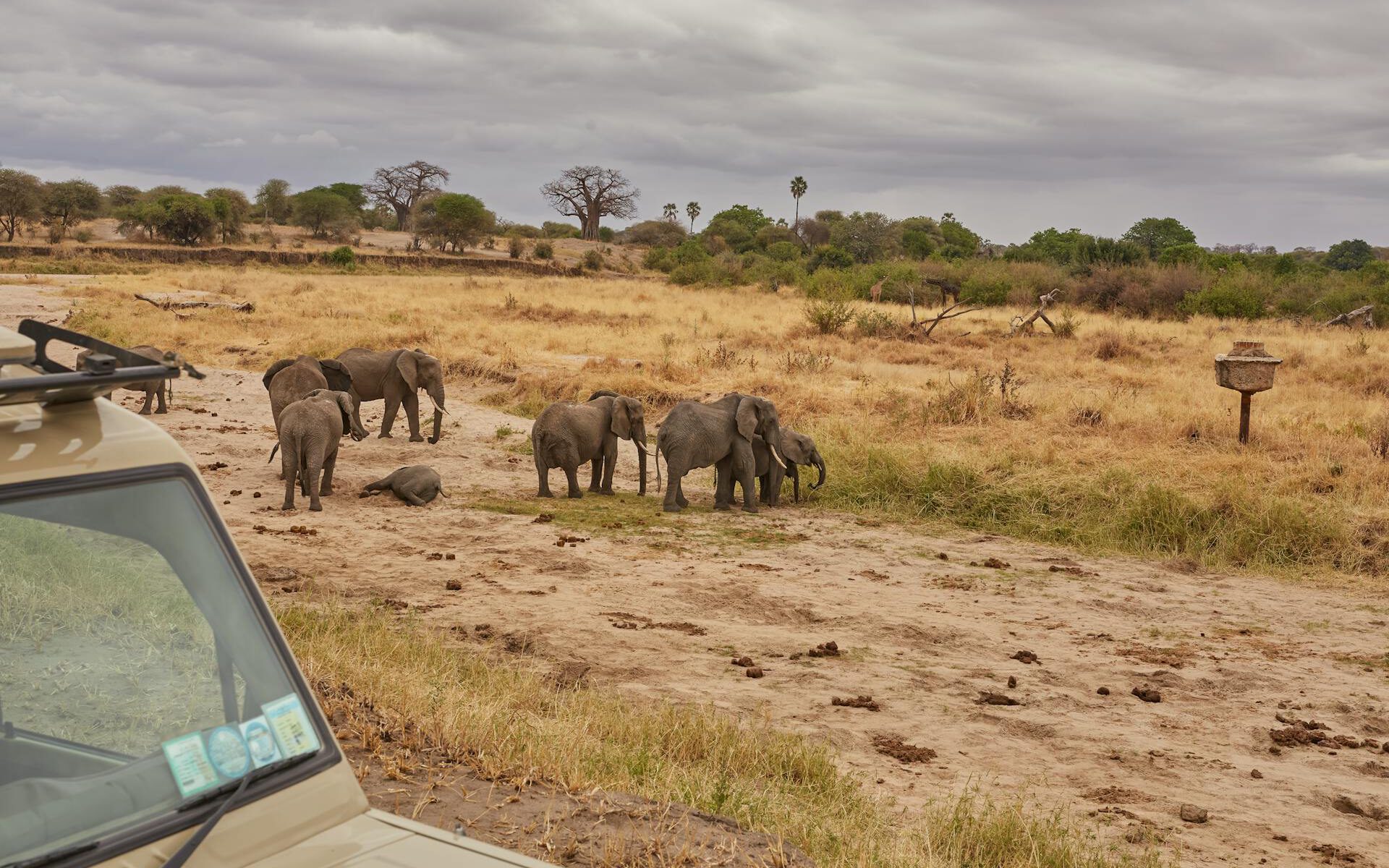
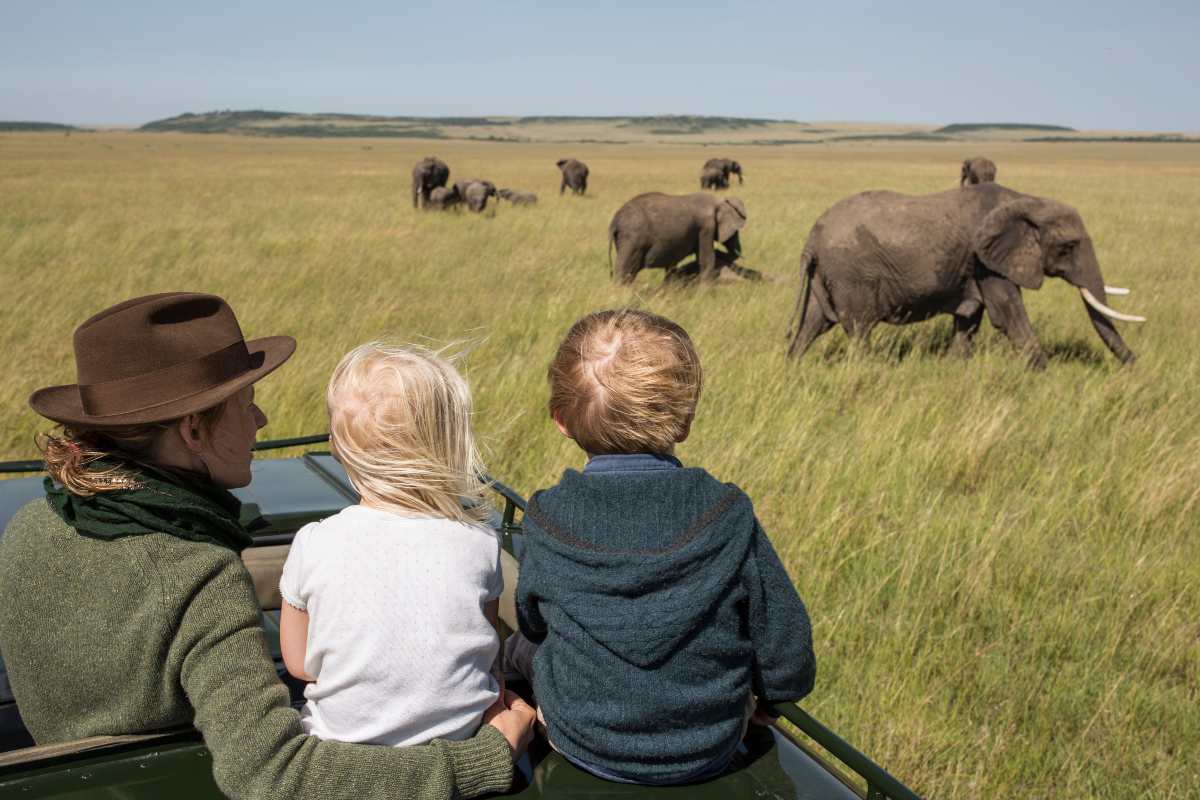
And then there are the elephants. Amboseli is known worldwide, justifiably and emphatically, as the Land of Giants. Over 1,500 elephants roam freely across the park’s open plains, in herds so large and so relaxed around vehicles that close encounters feel less like luck and more like a daily appointment. These are among the most studied elephant populations on earth. The Amboseli Elephant Research Project has been running since 1972, the longest continuous study of wild elephants anywhere, and the result is a community of animals so well understood that individual elephants have names, histories, and documented personalities. Watching a matriarch lead her family to the swamps at midday, calves stumbling through the water beside her, is a study in intelligence and tenderness that stays with you long after the dust of the plains has washed off.

The park encompasses five main wildlife habitats: savanna grassland, acacia woodland, rocky thornbush, swamps and marshland, and the contrast between them gives Amboseli a visual variety that surprises many first-time visitors. The swamps are the park’s lifeblood, fed by underground streams flowing from Kilimanjaro’s glaciers, green and permanent even in the driest months, drawing every living thing in the ecosystem to their edges. Hippos wallow. Buffalo graze the wetland margins. Hundreds of waterbirds crowd the shallows. And elephants wade in chest-deep, spraying themselves with cool water in the midday heat, looking entirely content with the arrangement.

Lions hunt the open plains. Cheetahs chase Thomson’s gazelles across the flat, treeless grassland in sprints so fast they blur. Maasai giraffes browse the acacia canopy against the mountain backdrop with an elegance that never stops being extraordinary. Over 600 bird species have been recorded in and around the park, flamingos gathering on the alkaline flats of Lake Amboseli when the rains come, pelicans drifting overhead, lilac-breasted rollers burning electric blue from every available perch.

The Maasai people have shared this landscape with its wildlife for centuries, their red-robed figures a part of the scenery as familiar and as dignified as the elephants themselves. A visit to a Maasai village at the edge of the park connects the wildlife experience to a living human culture that is as extraordinary, in its own way, as anything on four legs.

Amboseli does not need the Mara’s drama or Tsavo’s vastness to justify itself. It has its own quiet confidence, the confidence of a park that knows exactly what it offers, and offers it every single morning, against the most breathtaking mountain backdrop in Africa.

Maasai Mara National Reserve.

Every year between July and October, the greatest wildlife spectacle on earth plays out on the plains of southwestern Kenya. The Great Wildebeest Migration over 1.5 million wildebeest, 400,000 zebra, and 200,000 antelope moving in a thundering, unstoppable mass from Tanzania’s Serengeti northward into the Maasai Mara in search of fresh grass and water. They have been making this journey for millennia. They will keep making it long after we are gone. And when they reach the Mara River, crocodile-filled, fast-moving, and terrifying, and the first wildebeest finally leaps, the whole savanna seems to hold its breath.

No camera fully captures it. No description does it justice. You have to be there.

But here is the thing about Maasai Mara that most people discover once they arrive: the Migration is extraordinary, and the Mara is extraordinary even without it. Though the reserve covers just 0.01% of Africa’s total land area, almost 40% of the continent’s larger mammals are found here. That number alone tells you everything. This is one of the densest, richest, most generously stocked wildlife ecosystems on the planet, and it delivers year-round, migration or not.

The big cats are what set the Mara apart from almost everywhere else. Between 850 and 900 lions roam the reserve and its surrounding conservancies, large prides, well-studied, and remarkably relaxed around vehicles. Cheetahs hunt the open plains of the Mara Triangle in the golden morning light, their sprints so fast and so fluid they look like something dreamed up rather than evolved. Leopards drape themselves over acacia branches along the river corridors, spotted and half-hidden and utterly magnificent. The Mara is one of the few places on earth where seeing all three big cats in a single day is not just possible, it is genuinely likely.

The reserve borders the Serengeti National Park in Tanzania to the south, forming one continuous, unfenced ecosystem where wildlife moves freely across an ancient landscape that has never recognized borders. The Maasai people, the original and enduring stewards of this land, give the reserve its name and its soul. “Mara” means spotted in the Maasai language, describing the landscape of scattered trees and dappled light as seen from a distance. A visit to a traditional Maasai village, sitting with elders around a fire as the sun drops behind the plains, adds a human dimension to the safari that lingers as long as any wildlife sighting.

With over 470 bird species, including 60 raptors, the Mara is also one of East Africa’s finest birding destinations. Secretary birds stride through the grass. Lilac-breasted rollers perch on termite mounds. Martial eagles circle on thermals overhead. The birdlife alone would justify the journey.

The Maasai Mara has been voted one of the Seven Wonders of the Natural World. Stand on the open plains at dawn, the grass silver with dew, a lion pride resting on a kopje in the distance, and the horizon stretching away in every direction into pure, wild Africa, and you will understand why, without needing anyone to explain it to you.

Gishwati-Mukura National Park.

The 1994 genocide that tore Rwanda apart not only claimed human lives. It emptied the Gishwati and Mukura forests too, as families fleeing violence settled in the trees, cleared the land, and farmed the slopes. By the early 2000s, a forest that once stretched for hundreds of kilometers had been reduced to a fragment. The chimpanzees that remained retreated deeper into what little was left. The birds fell silent. The forest held its breath.

And then Rwanda did what Rwanda has become remarkable at doing. It rebuilt.

Through one of Africa’s most ambitious reforestation and conservation programs, the Gishwati and Mukura forest blocks were restored, reconnected, legally protected, and in 2015 officially gazetted as Rwanda’s fourth national park. Today, a wildlife corridor links Gishwati Forest to Mukura Forest and down to Nyungwe Forest, a green lifeline running through the western highlands, stitching broken habitat back together one tree at a time. What you walk into when you enter Gishwati-Mukura is not just a national park. It is a resurrection.

Small by any measure, just 34 square kilometers of forest sitting on the ridge that divides the Congo and Nile water catchment areas, Gishwati-Mukura punches quietly above its weight. The forest is dense, layered, and alive with the kind of energy that comes from a place actively healing itself. Mist rolls through the canopy in the early morning. Over 232 bird species have been recorded in Gishwati alone, including Albertine Rift endemics and forest specialists found in very few other places on earth. The Rwenzori turaco, the regal sunbird, the purple-breasted sunbird birders who make the detour to Gishwati-Mukura rarely leave disappointed.

But it is the chimpanzees that draw most visitors in and the chimpanzees that make Gishwati-Mukura’s story feel most personal. The park is home to a community of semi-habituated chimpanzees comfortable with trackers but still wary of strangers, meaning every visitor becomes an active part of the ongoing habituation process. This is not a polished, guaranteed encounter. It is something rawer and, in its own way, more meaningful, a reminder that conservation is not a finished product but a living, ongoing relationship between people, wildlife, and forest. The chimps share the forest with L’Hoest’s and golden monkeys, both endemic to the Albertine Rift.

The park’s restoration serves as a model for sustainable conservation in Africa, demonstrating how proactive management can transform degraded ecosystems into thriving habitats. The communities surrounding Gishwati-Mukura are at the heart of that model. Former farmers who once cleared forests for survival now work as rangers, guides, and conservation partners, their relationship with the land transformed from extraction to stewardship.

Gishwati-Mukura will not overwhelm you with spectacle. It will do something quieter and more lasting. It will show you what a forest looks like when people decide, collectively and deliberately, that it deserves to survive. And it will show you that decision paying off, one chimpanzee call, one rare bird, one new sapling at a time.

Akagera National Park.

They brought the lions back in 2015. Seven of them, translocated from South Africa, were released into a park that had not heard a lion’s roar in nearly a decade. The rangers watched. The community held its breath. And then, slowly, surely, the lions did what lions do: they spread out, they hunted, they multiplied. Today, the pride numbers over fifty. The roar is back. And Rwanda’s greatest conservation comeback story is still being written, one sunrise at a time.

Welcome to Akagera National Park, Rwanda’s only savanna park, its only Big Five destination, and one of Africa’s most remarkable stories of wildlife restoration told against the backdrop of a country that itself knows something about rising from the ashes.

Stretching across 1,122 square kilometers in eastern Rwanda along the Tanzanian border, Akagera is a park of sweeping contrasts: open grasslands rolling into acacia woodland, misty hills dropping into papyrus swamps, and a chain of lakes shimmering along the valley floor, their banks thick with hippos, crocodiles, and waterbirds that make even a short boat cruise feel like a highlight reel of African wildlife. Lake Ihema, the largest of these lakes, holds one of the highest concentrations of hippos in the entire region. A sunset boat cruise across its mirror-flat surface, with hippos surfacing beside you and fish eagles calling overhead, is one of those experiences that people book Rwanda for and leave Rwanda talking about.

On the plains, the full drama of African savanna wildlife plays out daily. Masai giraffes reintroduced in the 1980s browse the acacia canopy with their characteristic slow-motion elegance. Herds of zebra move across the golden grass. Elephants gather at the water in the late afternoon. Topi, roan antelope, eland, waterbuck, impala, and oribi fill the grasslands with the kind of abundance that reminds you why East Africa became synonymous with safari in the first place.

And then there are the rhinos. Black rhinos were reintroduced in 2017, the first time they had walked Rwandan soil in a decade, followed by white rhinos shortly after. Akagera is now fully, proudly, a Big Five park. Lion, leopard, elephant, buffalo, and rhino, all within one park, all in eastern Rwanda, all the result of a conservation effort that the whole continent looks at with admiration.

Over 500 bird species have been recorded here, including the elusive shoebill, that prehistoric-looking giant that sends birders into raptures, and the papyrus gonolek, found only in the papyrus swamps that line the lakes. A morning game drive, a boat cruise, and an afternoon at the lakeside will reward any birder with a list that rivals any park in East Africa.

Akagera is managed through a partnership between African Parks and the Rwanda Development Board, a model of conservation governance that has transformed the park from a depleted, poached-out shell into one of Africa’s finest wildlife destinations in under two decades. The communities surrounding the park are partners in that success, their livelihoods now intertwined with the park’s health in a way that turns every visitor’s entrance fee into a vote for a future where people and wildlife share the same thriving landscape.

Rwanda is famous for gorillas. But Akagera is proof that the country’s conservation ambition extends far beyond any single species, all the way to the open savanna, the lake shores, and the long grass where lions are learning, again, that this land belongs to them.

Nyungwe Forest National Park.

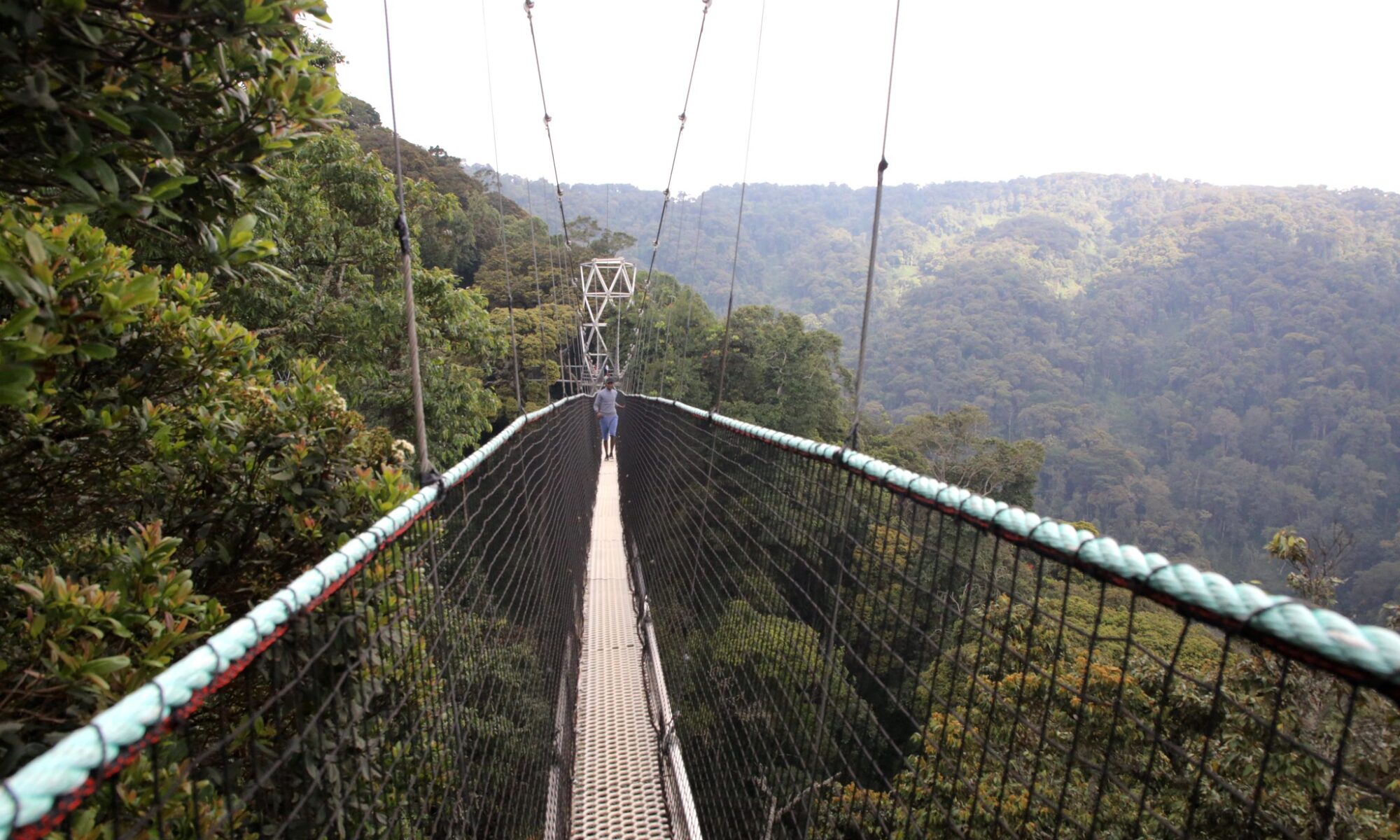
Fifty meters. That is how high the canopy walkway takes you, suspended above one of the oldest rainforests in Africa, the treetops spreading in every direction as far as you can see, birdsong coming from somewhere below and somewhere above and somewhere you cannot quite locate, the forest floor invisible beneath a layered ceiling of green that has been growing, uninterrupted, since the Ice Age.

Take a moment up there. Look out. Breathe.

You are standing above a forest that survived the Ice Age. While glaciers swallowed most of Africa’s vegetation, Nyungwe stayed green, a biological refuge that sheltered thousands of species through millennia of planetary upheaval. What emerged on the other side was one of the most species-rich mountain forests on the entire continent. And it is all still here, in southwestern Rwanda, waiting for you to walk into it.

Nyungwe Forest National Park covers 980 square kilometers of montane rainforest, bamboo, grassland, swamp, and bog along the spine of the Congo-Nile divide. Stand in the right spot and rainfall on your left flows west into the Congo River. Rainfall on your right flows east toward the Nile. Researchers believe the headwaters of the world’s longest river, the furthest source of the Nile, lie within this forest. There is something quietly extraordinary about standing at a place where the water beneath your feet is already beginning a journey of thousands of kilometers.

But you are not here for the geography alone. You are here for what lives in these trees.

Nyungwe holds 13 primate species, the highest concentration of primates in any park in East Africa. Chimpanzee trekking here is exceptional, with habituated communities moving through the forest in large, vocal, utterly captivating groups. But it is the colobus monkeys that produce Nyungwe’s most jaw-dropping moment, troops of Ruwenzori colobus numbering up to 400 individuals, their black and white capes flashing through the canopy in a coordinated, acrobatic spectacle unlike anything else in Africa. L’Hoest’s monkey, the grey-cheeked mangabey, the owl-faced monkey, the blue monkey. This forest is a primate lover’s paradise of extraordinary depth and variety.

Over 300 bird species fill every altitude zone, 29 of them endemic to the Albertine Rift and found nowhere else on earth. The Rwenzori turaco burns vivid and improbable through the mid-canopy. The red-collared mountain babbler, Doherty’s bushshrike, the yellow-eyed black flycatcher species that serious birders travel across continents to find, all present in a single forest that rewards patience with sightings of almost embarrassing richness.

And then there is the canopy walk itself. Suspended 50 meters above the forest floor on a series of walkways and platforms, it offers a perspective on the rainforest that few experiences in Africa can match, eye level with the canopy, the forest stretching endlessly in every direction, monkeys moving through the branches beside you, the silence broken only by wind and birdsong.

Nyungwe is not Volcanoes. It will not give you a silverback at close range or a moment you can describe in one dramatic sentence. What it gives you is something slower, deeper, and in its own way just as unforgettable as the feeling of being inside one of Africa’s last great ancient forests, surrounded by life that has been here far longer than any of us, and will be here long after we are gone.

Volcanoes National Park.

She came here in 1967, climbed into the mist-covered mountains of northwestern Rwanda, and changed the way the world thought about gorillas forever.

Dian Fossey chose these volcanoes. And the gorillas she devoted herself to protecting, and ultimately gave her life to protect, are still here. Thriving. Their numbers are growing. Their families carry the names she gave them, tracked by rangers who continue a mission she started in a small cabin on a misty mountainside that the whole world has since heard of. To walk into Volcanoes National Park is to walk into one of the greatest conservation stories ever told. And then to walk a little further and come face to face with the story itself.

Rwanda’s crown jewel sits in the northwest of the country, cradled within the magnificent Virunga Mountains, a chain of ancient volcanoes shared between Rwanda, Uganda, and the Democratic Republic of Congo. Five volcanoes rise within the park’s borders: Karisimbi, Bisoke, Muhabura, Gahinga, and Sabyinyo, their peaks draped in forest and cloud, their slopes holding one of the most precious concentrations of life on earth. At 160 square kilometers, Volcanoes is not a large park. But what it contains is immeasurable.

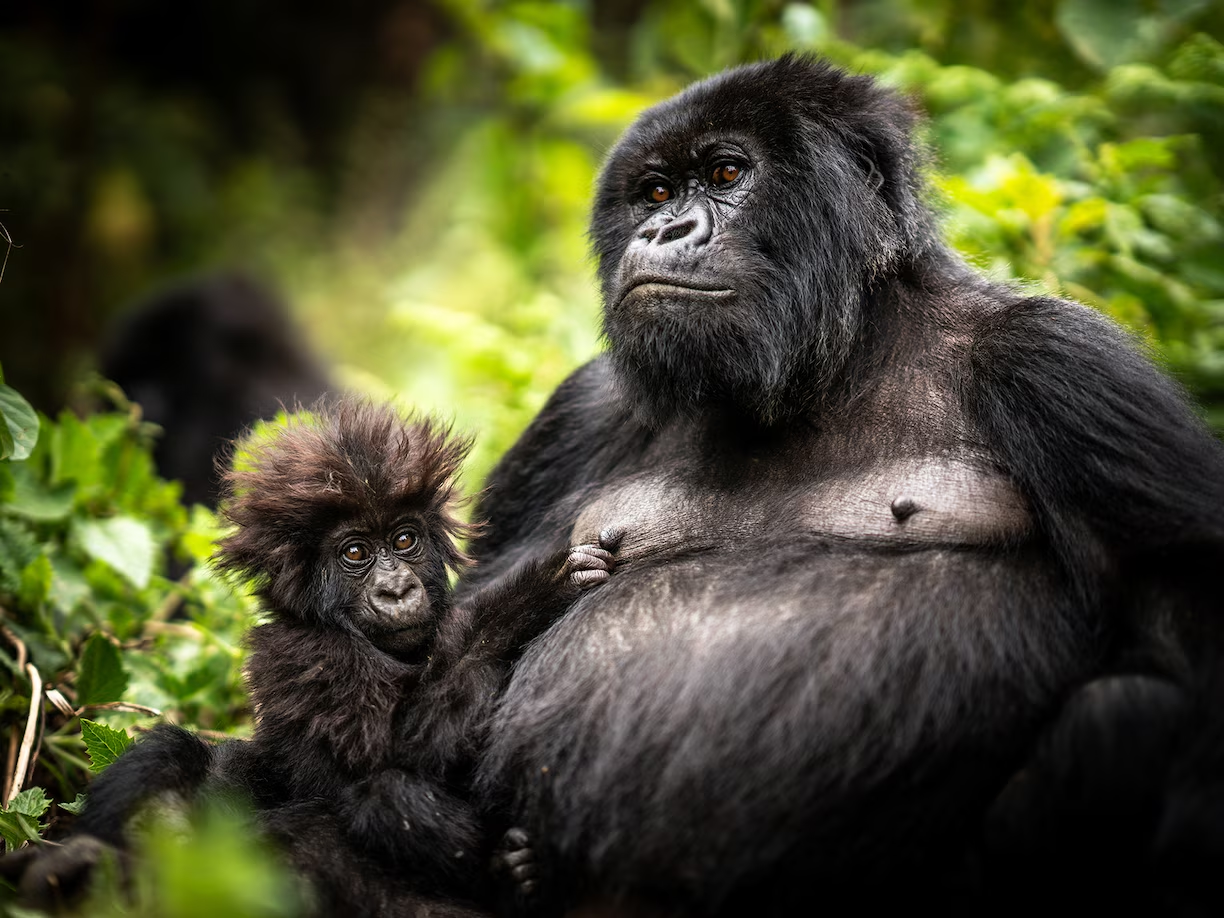
Twelve habituated mountain gorilla families roam these forests: Susa, Amahoro, Sabyinyo, Agashya, Kwitonda, and others, each with its own personality, its own dynamics, its own silverback holding the group together with quiet, immovable authority. Your permit allows you one hour with them. One hour that every single visitor, without exception, describes as the most extraordinary of their life. You push through bamboo and dense undergrowth, guided by trackers who have spent years learning to read the forest. And then a shape in the vegetation. A sound. The guide raises his hand. You stop. And there, close enough to hear breathing, a family of mountain gorillas goes about their morning. A mother nurses her infant. Two youngsters wrestle in the undergrowth. A silverback raises his head, regards you with ancient, intelligent eyes, and returns to his breakfast. You are sharing space with our closest wild relatives, and every cell in your body knows it.

But Volcanoes is not only gorillas. The golden monkey, flame-faced, acrobatic, and found naturally in only the Virunga volcanoes, leaps through bamboo groves with an energy that makes everyone around it smile involuntarily. Hiking to the summit of Mount Bisoke rewards the willing with a crater lake of impossible blue, sitting at 3,711 meters above sea level. The tomb of Dian Fossey, resting beside her beloved gorilla Digit on the Karisoke Research Station grounds, is a pilgrimage that reminds you that conservation is not abstract, it is personal, it is costly, and it is worth it.

Over 200 bird species fill the park’s altitude zones, including 29 endemic to the Virunga and Rwenzori regions. The park is one of Africa’s oldest, gazetted in 1925, and carries the weight of that history in every ancient tree and every mist-soaked morning.

Rwanda has built something remarkable here, a model of conservation tourism that the entire world studies and admires. Permit fees fund anti-poaching patrols, ranger salaries, and community development programs that have turned local people from potential poachers into the gorillas’ most passionate protectors. When you buy a permit, you are not just buying an experience. You are funding a future.

Semuliki National Park.

Stand at the edge of this forest and you are standing at the edge of two worlds.

Behind you, East Africa. The savannas, the mountains, the parks, you know. In front of you is the Congo. Not the country, but the ecosystem. The vast, ancient, utterly different biological universe of Central Africa, stretching westward for thousands of kilometers in an unbroken cathedral of rainforest. Semuliki National Park is where these two worlds meet, overlap, and produce something found absolutely nowhere else in East Africa.

The only tract of true lowland tropical rainforest in the entire region, Semuliki sits on the floor of the Albertine Rift Valley in western Uganda, at the eastern limit of the Congo Basin’s legendary Ituri Forest. What grows and lives here arrived from the west carried by wind, by water, by the slow migration of species over tens of thousands of years. The result is a park that reads like a different continent. Species that have never spread beyond this single outpost in East Africa. Birds that birders travel from across the world to tick off a list that cannot be completed anywhere else. Animals carrying names most Uganda travellers have never heard.

And then, rising from the forest floor the hot springs of Sempaya. Boiling geothermal vents bubbling through the earth at temperatures high enough to cook an egg, framed by rainforest and mist and the calls of hornbills overhead. The female spring Nyasimbi erupts in a geyser that shoots boiling water meters into the air, surrounded by a ring of scalding pools that locals have used for cooking for generations. It is surreal, theatrical, and completely unforgettable, the kind of thing that makes you stop and remember that the earth beneath your feet is very much alive.

The wildlife here rewards patience and a sharp eye. Forest elephants, smaller, rounder-eared, and more elusive than their savanna cousins, move silently through the undergrowth in herds that slip between Uganda and the Democratic Republic of Congo with no regard for borders. Chimpanzees call from deep in the canopy. De Brazza’s monkey, one of Africa’s most striking and least seen primates, with its vivid orange brow and white beard, peers through the leaves with the suspicious dignity of a very distinguished elder. Over 53 mammal species and 11 primate species inhabit this forest, several of them found nowhere else in East Africa.

But it is the birds that make serious naturalists lose their composure entirely. With 441 recorded species, 35 of which exist nowhere else in East Africa, Semuliki is in a category of its own for birdwatching. Congo Basin species crowd the checklist alongside East African forest birds in a combination that simply does not occur anywhere else on this side of the continent. The black-casqued wattled hornbill, the lyre-tailed honeyguide, and the Nkulengu rail are names that mean everything to a birder and represent encounters that cannot be replicated, not in Kenya, not in Tanzania, not in any other park in Uganda.

The Batwa people, ancient forest dwellers who have lived in and around this forest for centuries, carry knowledge of Semuliki that no guidebook can replace. Walking with them through the undergrowth is to see the forest through completely different eyes. And the Batuku pastoralists of the rift valley floor add yet another layer to a park that is, at its heart, a place of extraordinary human and biological depth.

Semuliki will not give itself up easily. It asks you to slow down, to listen, to look twice. But for those willing to give it that attention, it gives back more than almost anywhere else in Uganda.

Mt. Elgon National Park

It erupted for the last time over 24 million years ago. And it has been quietly spectacular ever since.

Mount Elgon is one of those places that rewards the traveler who looks beyond the obvious the one who is not chasing the big five on an open savanna but is instead drawn to something older, stranger, and altogether more mysterious. An extinct shield volcano straddling the border of eastern Uganda and Kenya, with the largest volcanic caldera on earth and a summit that rises to 4,321 meters above sea level this is Uganda’s hiking mountain, Uganda’s cave mountain, Uganda’s mountain of unexpected wonders.

And it begins, as the best things often do, with elephants going underground.

Every night, deep inside the ancient lava caves of Mount Elgon Kitum, Chepnyali, Mackingeny forest elephants push into the darkness to mine salt from the cave walls. Not metaphorically. Literally. They lick and dig the mineral-rich rock with their tusks, moving silently through caverns that stretch 200 meters into the mountainside, their shapes enormous in the dark. It is one of the most extraordinary wildlife behaviors in all of Africa, and it happens here, and almost nowhere else. To witness it is to feel like you have stumbled onto something the rest of the world has not yet discovered.

Covering 1,110 square kilometers in eastern Uganda, Mount Elgon National Park is a UNESCO Man and Biosphere Reserve a designation earned by the sheer layered richness of what lives here. The lower slopes hold dense montane forest where elephants, buffalo, bushbuck, and waterbuck move through the undergrowth. Black-and-white colobus monkeys leap between ancient trees. Blue monkeys call from the canopy. Olive baboons move in troops along the forest floor, unbothered and watchful.

Climb higher and the forest gives way to bamboo, then to heathland draped in moss, then finally to open Afro-alpine moorland where giant lobelias and groundsels stand like sentinels against a sky that feels impossibly close. The caldera at the top forty square kilometers of ancient volcanic bowl is one of the most surreal and beautiful high-altitude landscapes in East Africa. Hot springs bubble at temperatures of up to 48 degrees Celsius in what was once the mountain’s fiery heart.

Over 300 bird species fill the park’s elevation zones, 40 of which are found nowhere else in Uganda. The lammergeyer the bearded vulture soars on thermals above the upper slopes with a wingspan that defies belief. Jackson’s francolin, the Tacazze sunbird, the cinnamon-chested bee-eater this is a birder’s mountain, and serious birders who find their way here often describe it as one of Uganda’s most underrated discoveries.

The Bagisu people have lived on the slopes of Elgon for generations, calling the mountain Masaba the name of their founding father. Their relationship with this volcano is ancestral, spiritual, and deeply alive. The Imbalu circumcision ceremony, one of East Africa’s most powerful cultural traditions, takes place here every two years, drawing thousands of people to the mountain’s base in a celebration of passage and identity that has continued unbroken for centuries.

Mount Elgon does not shout for your attention. It waits. And the travelers who find their way to it to the caves, the caldera, the waterfalls at Sipi, the forests full of monkeys and rare birds leave wondering why they took so long.